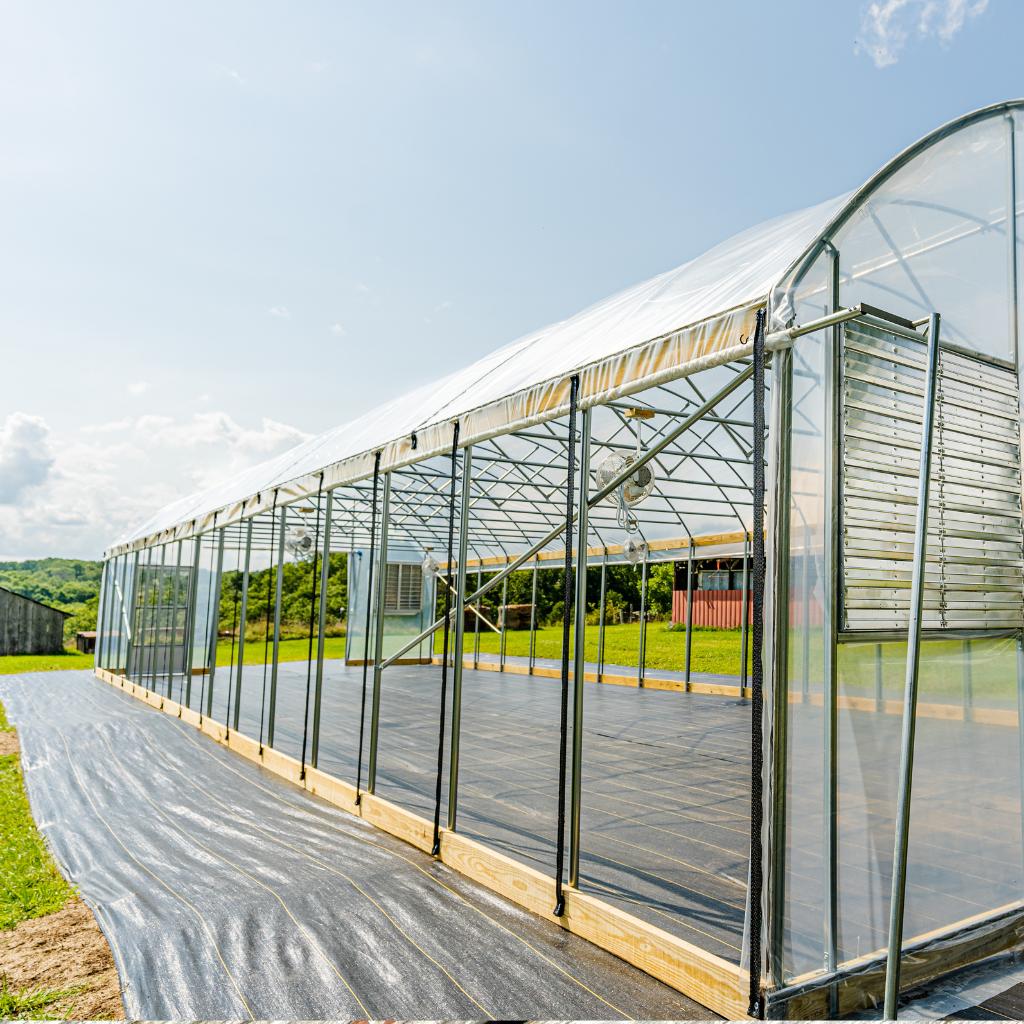
Greenhouse Side Ventilation System for Better Airflow and Climate Control
A well-designed greenhouse does more than protect crops from bad weather. It creates a controlled environment where temperature, humidity, airflow, and light can be managed according to crop requirements.
Among the different ventilation options available, a greenhouse side ventilation system is one of the most practical solutions for improving natural airflow. By opening the side sections of the greenhouse, hot air can escape while fresh outdoor air enters at a lower level.
For commercial growers, this simple principle can make a significant difference. Proper side ventilation can reduce heat accumulation, improve humidity control, support healthier plants, and reduce the workload placed on mechanical cooling equipment.
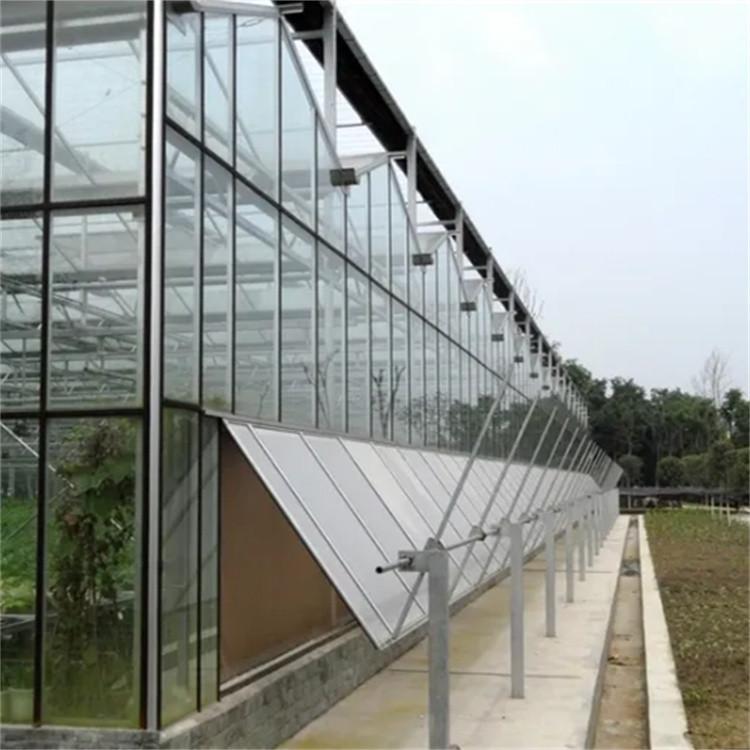
Good Growing Tech supplies customizable ventilation solutions for agricultural greenhouses, including roll-up side ventilation, motorized systems, manual ventilation structures, insect-screen options, and integrated climate-control solutions.
What Is a Greenhouse Side Ventilation System?
A greenhouse side ventilation system is a structure installed along the side walls of a greenhouse to allow controlled air exchange.
Depending on the greenhouse design, the side wall may use:
- Roll-up greenhouse film
- Roll-up curtain systems
- Polycarbonate panels
- Insect-proof mesh
- Ventilation windows
- Motorized side vents
- Manual ventilation mechanisms
The opening can be adjusted according to outdoor temperature, wind conditions, humidity, and crop requirements.
In a simple greenhouse, the operator may manually open or close the side curtain. In a commercial greenhouse, the system can be connected to motors, sensors, and a climate controller so that ventilation responds automatically to environmental conditions.
Why Side Ventilation Matters in Commercial Greenhouses
Greenhouses naturally absorb solar radiation during the day. While this is useful for crop growth, excessive heat can quickly become a problem.
When air inside the greenhouse becomes too hot, plants may experience:
- Reduced photosynthetic efficiency
- Excessive water loss
- Leaf stress
- Poor flower development
- Uneven crop growth
- Increased humidity after irrigation
- Greater disease pressure
A properly designed greenhouse side ventilation system helps exchange hot internal air with cooler outside air.
It is particularly useful during spring and summer when natural ventilation can significantly reduce the need for mechanical cooling.
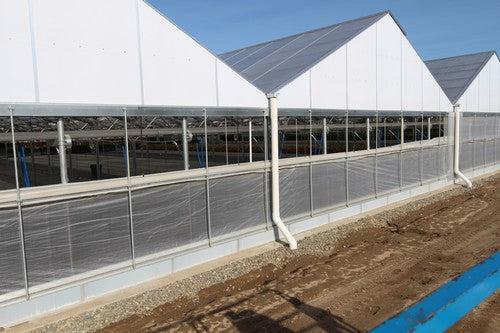
How Does Greenhouse Side Ventilation Work?
The operating principle is straightforward.
When the side ventilation opening is raised, outside air enters through the lower side of the greenhouse. At the same time, warm air inside the structure moves upward and toward available ventilation openings.
If the greenhouse also has roof vents, exhaust fans, or circulation fans, these systems can work together to create a more effective airflow pattern.
A typical ventilation cycle can include:
1. Temperature detection
Sensors measure the internal temperature.
2. Controller analysis
The climate controller compares the actual temperature with the target setting.
3. Vent activation
When ventilation is required, the motor opens the side curtain or vent.
4. Air exchange
Fresh air enters while warm and humid air moves out.
5. Automatic adjustment
The opening can be increased or reduced according to changing environmental conditions.
This approach provides more consistent environmental management than simply opening greenhouse doors manually.
Roll-Up Side Ventilation for Greenhouse Film
Roll-up ventilation is one of the most common solutions for plastic-film greenhouses.
A tube or shaft is positioned along the side wall. When the shaft rotates, the greenhouse film rolls upward, creating an adjustable ventilation opening.
The system can be configured with:
- Manual crank operation
- Electric gear motor
- Roll-up tube
- Film fixing profile
- Supporting brackets
- Limit switches
- Control box
- Insect netting
For commercial projects, motorized roll-up systems are often preferable because they can be connected to a centralized greenhouse control system.
The ventilation height can also be adjusted according to weather conditions rather than simply being fully open or fully closed.
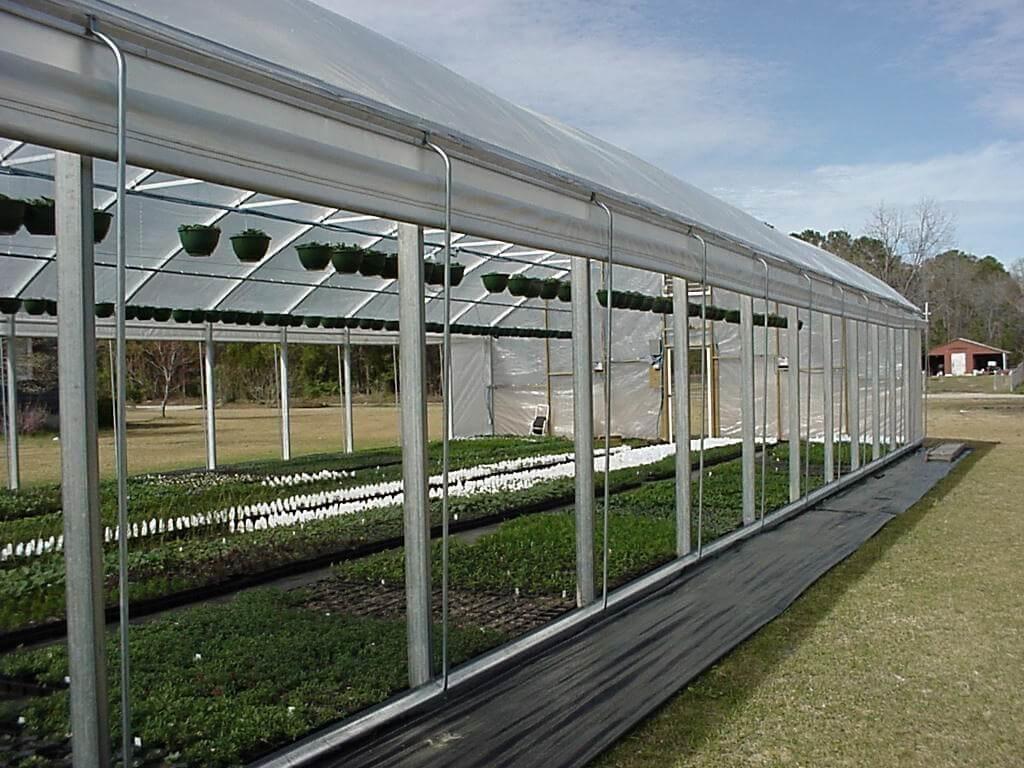
Motorized Greenhouse Side Ventilation System
For larger greenhouses, automation can make ventilation much easier to manage.
A motorized greenhouse side ventilation system generally uses a gear motor to rotate the ventilation shaft. The motor can be controlled manually through a switch or automatically through a greenhouse climate controller.
An automated system may respond to:
- Temperature
- Relative humidity
- Wind speed
- Rain
- Time schedules
- Solar radiation
- Crop growth stage
For example, if greenhouse temperature rises above the configured target, the controller can gradually open the side vents.
When the temperature drops, the system can close them again.
This reduces unnecessary ventilation and helps maintain a more stable growing environment.
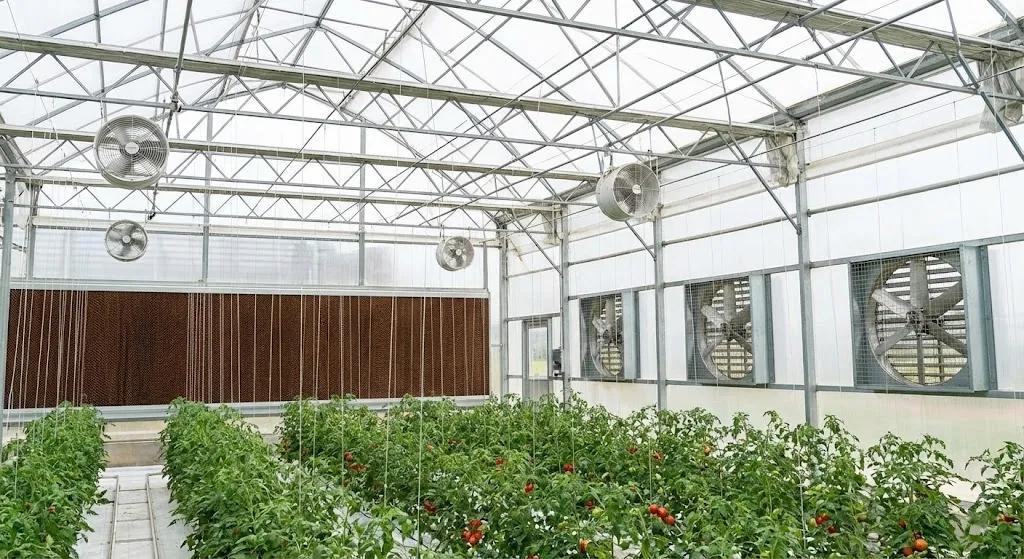
Greenhouse Side Ventilation with Insect Netting
Opening a greenhouse creates another challenge: insects can enter together with fresh air.
For vegetable production, flowers, nurseries, and other crops where pest management is important, insect-proof mesh can be installed behind the ventilation opening.
This provides a useful balance between airflow and crop protection.
The mesh can help reduce the entry of common greenhouse pests while still allowing air to pass through the side opening.
When designing the system, buyers should consider:
- Mesh density
- Air permeability
- UV resistance
- Cleaning requirements
- Frame structure
- Installation method
- Local pest pressure
The appropriate mesh specification depends on the crop and growing environment.
Main Components of a Side Ventilation System
A complete system is more than just a motor and curtain.
1. Ventilation Curtain
The curtain creates the adjustable opening. Greenhouse film, blackout fabric, insect mesh, or other materials can be selected according to the project.
2. Roll-Up Shaft
The shaft transfers rotational movement from the motor to the curtain.
3. Gear Motor
The motor provides the torque required to raise and lower the side curtain.
4. Supporting Brackets
Brackets secure the shaft and motor assembly to the greenhouse frame.
5. Limit Switches
Limit switches help define the fully open and fully closed positions.
6. Control System
The system can be operated manually or integrated with greenhouse climate-control equipment.
7. Wind and Weather Protection
For projects in windy regions, additional structural reinforcement may be required.
Benefits of a Greenhouse Side Ventilation System
Better Temperature Management
Natural ventilation allows excess heat to escape without relying entirely on air-conditioning or mechanical cooling.
Improved Humidity Control
Air exchange helps remove humid air, especially after irrigation or periods of high transpiration.
Lower Cooling Costs
When outdoor conditions are suitable, natural ventilation can reduce operating time for exhaust fans and other cooling equipment.
Better Air Movement
Continuous air exchange creates a healthier environment for many greenhouse crops.
Reduced Labor
Motorized systems eliminate the need for workers to repeatedly open and close greenhouse curtains manually.
Flexible Environmental Control
The ventilation opening can be adjusted according to temperature, humidity, wind, and crop requirements.
Applications of Greenhouse Side Ventilation
A side ventilation system can be used in many types of agricultural structures
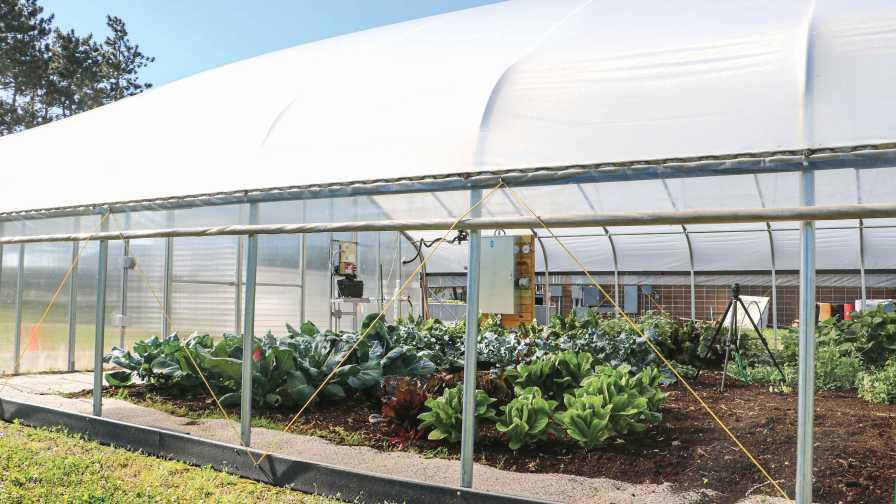
Vegetable Production
Suitable for tomatoes, cucumbers, peppers, lettuce, leafy vegetables, and other greenhouse crops.
Flower Production
Controlled ventilation can help maintain temperature and humidity conditions required by ornamental plants and cut flowers.
Plant Nurseries
Seedlings and young plants can benefit from consistent airflow while remaining protected from harsh outdoor conditions.
Hydroponic Greenhouses
Hydroponic systems often require careful temperature and humidity management because irrigation and plant density can create a humid environment.
Research and Demonstration Greenhouses
Automated ventilation can provide more repeatable environmental conditions for agricultural research.
How to Choose the Right Greenhouse Side Ventilation System
Not every greenhouse requires the same ventilation design.
Before purchasing, buyers should evaluate several factors.
Greenhouse Dimensions
The length, height, span, and side-wall configuration determine the appropriate ventilation structure.
Greenhouse Covering
Film, glass, and polycarbonate greenhouses may require different ventilation mechanisms.
Local Climate
Hot climates generally require more ventilation capacity. Areas with strong winds require stronger structural support.
Crop Type
Different crops have different temperature and humidity requirements.
Automation Requirements
For small farms, manual ventilation may be sufficient. Large commercial projects usually benefit from motorized control.
Integration with Other Systems
Side ventilation should ideally work together with:
- Exhaust fans
- Circulation fans
- Cooling pads
- Heating systems
- Shading systems
- Irrigation systems
- Climate sensors
- Greenhouse control systems
A complete climate-control strategy is more effective than treating each component separately.
Technical Parameters of Greenhouse Side Ventilation System
| Parameter | Typical Specification |
|---|---|
| System Type | Side Roll-Up Ventilation |
| Operation | Manual / Motorized |
| Drive System | Gear Motor / Manual Gearbox |
| Curtain Material | Greenhouse Film / Mesh / Customized |
| Ventilation Height | Customized |
| Greenhouse Length | Customized |
| Frame Material | Galvanized Steel |
| Shaft Material | Galvanized Steel / Customized |
| Control | Manual Switch / Timer / PLC |
| Limit Switch | Optional |
| Insect Net | Optional |
| Climate Sensor Integration | Available |
| Wind Protection | Optional |
| Installation | Greenhouse Side Wall |
| Application | Vegetable / Flower / Nursery / Hydroponic |
| OEM/ODM | Available |
Note: Actual specifications should be confirmed according to greenhouse dimensions, covering material, local weather conditions, crop requirements, and the required level of automation.
Greenhouse Side Ventilation System from Good Growing Tech
Good Growing Tech provides greenhouse ventilation equipment and customized smart agriculture solutions for commercial growing projects.
Rather than supplying a standard motor and curtain without considering the greenhouse structure, the ventilation system can be configured around the actual project.
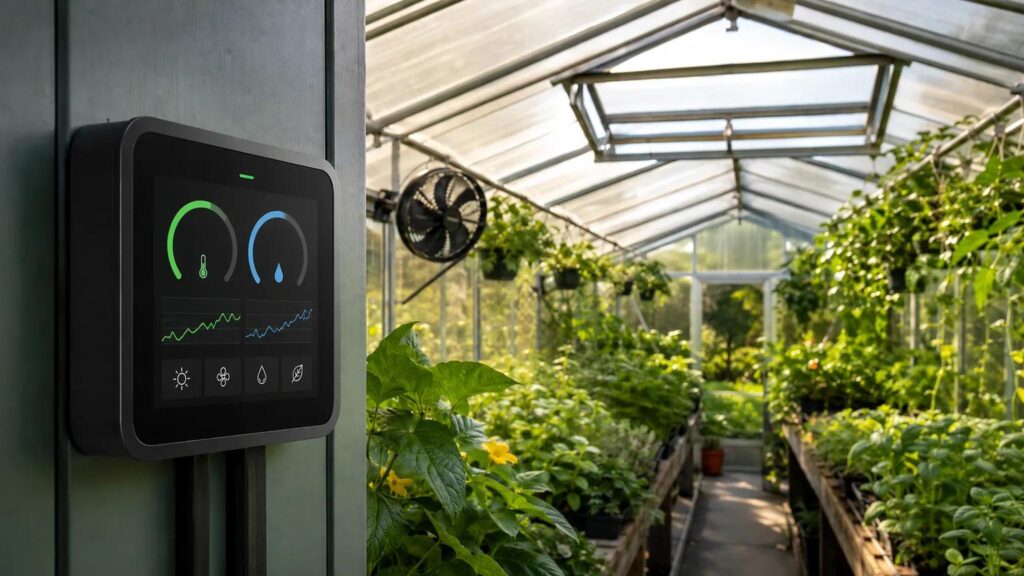
Depending on the application, the solution may include:
- Side roll-up ventilation
- Motorized ventilation
- Insect-proof mesh
- Gear motors
- Ventilation shafts
- Automatic control
- Temperature and humidity sensors
- Exhaust fans
- Cooling systems
- Shading systems
This makes the system suitable for both standalone greenhouse ventilation and larger integrated climate-control projects.
FAQs:
1. What is the main purpose of greenhouse side ventilation?
Its main purpose is to exchange hot and humid internal air with fresh outdoor air, helping control greenhouse temperature and humidity.
2. Can side ventilation be automated?
Yes. Motorized systems can be connected to temperature, humidity, wind, rain, and other sensors through a greenhouse climate-control system.
3. Is greenhouse side ventilation suitable for plastic greenhouses?
Yes. Roll-up side ventilation is particularly common in plastic-film greenhouse structures.
4. Can insect netting be added?
Yes. Insect-proof mesh can be installed together with the side ventilation structure to improve pest protection while maintaining airflow.
5. Can the system work with exhaust fans?
Yes. Side ventilation and exhaust fans can work together. Side vents provide fresh air intake while exhaust fans help remove hot internal air.
6. What type of motor is used?
Gear motors are commonly used because they provide the torque required to operate long roll-up curtains. The exact motor specification depends on curtain length, weight, and system design.
7. Can the ventilation height be customized?
Yes. The ventilation opening, greenhouse dimensions, shaft configuration, and control method can all be customized according to the project.
8. Can it be connected to a smart greenhouse system?
Yes. For commercial installations, the ventilation system can be integrated with sensors and a centralized greenhouse controller for automatic operation.
Conclusion
A reliable greenhouse side ventilation system is an important part of maintaining a productive growing environment. By allowing controlled natural airflow, it can help reduce heat buildup, manage humidity, improve air exchange, and lower the demand on mechanical cooling systems.
For small greenhouses, a manual roll-up system may be enough. For larger commercial projects, motorized ventilation combined with sensors and climate-control equipment provides much greater control.
The right solution ultimately depends on greenhouse size, covering material, local climate, crop requirements, and the desired level of automation. A properly designed ventilation system should therefore be considered as part of the complete greenhouse environment rather than as an isolated component.
Contact Good Growing Tech
📧 Email: arno@goodgrowingtech.com
🌐 Website: www.goodgrowingtech.com
📱 WhatsApp: +86 18056416155
🏢 Good Growing Tech – Professional Greenhouse Equipment & Smart Agriculture Solutions
Next recommended topic: Greenhouse Roof Ventilation System — this one can naturally connect with the side ventilation article and form a strong internal-link cluster for “greenhouse ventilation system.”