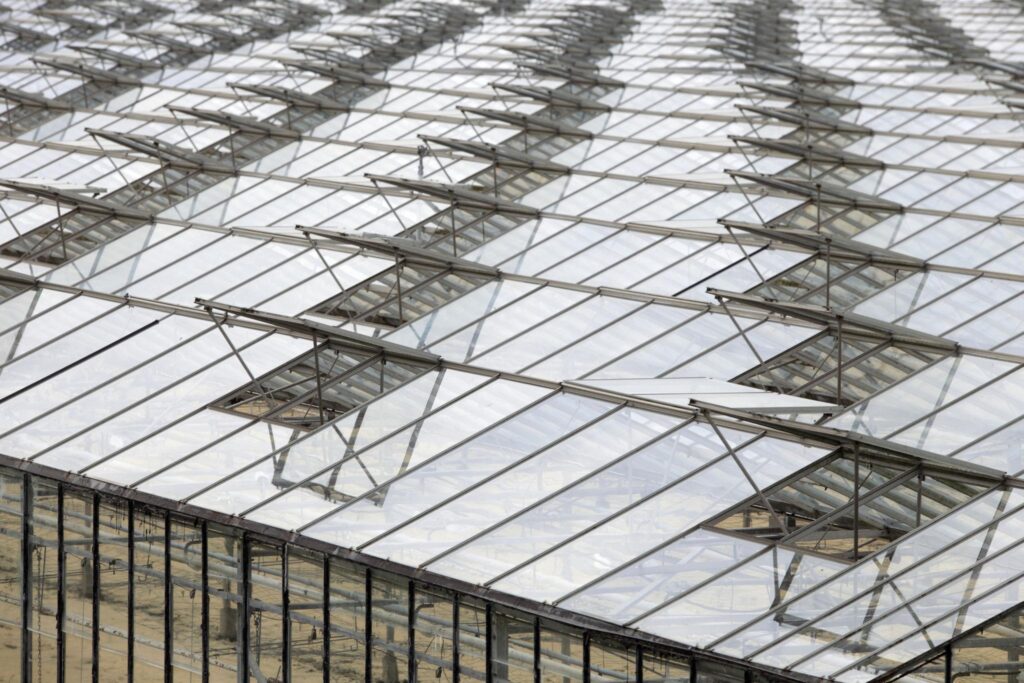
Greenhouse Roof Ventilation System for Efficient Climate Management
Ventilation is one of the most important parts of greenhouse climate management. A greenhouse needs to retain heat when temperatures are low, but it must also release excess heat and humidity when conditions become too warm.
A greenhouse roof ventilation system provides an efficient way to achieve this balance.
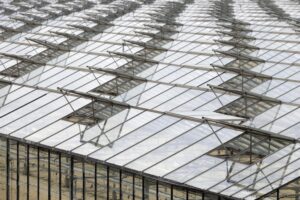
Installed along the roof or ridge of the greenhouse, roof vents allow warm air to escape naturally. Because warm air rises, roof-level ventilation can take advantage of natural air movement without requiring mechanical cooling equipment to operate continuously.
For commercial growers, this makes roof ventilation particularly useful for reducing heat accumulation, improving humidity management, and creating a more stable environment for crops.
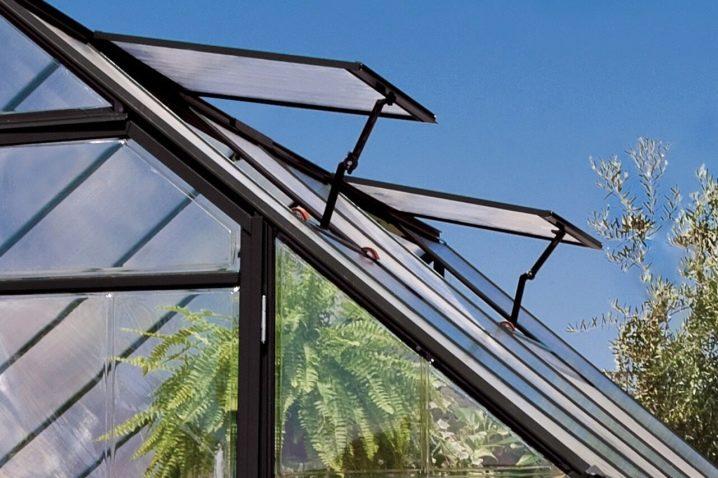
Good Growing Tech provides customizable greenhouse ventilation solutions for commercial agriculture, including roof vents, ridge ventilation, motorized opening systems, and integrated greenhouse climate-control solutions.
What Is a Greenhouse Roof Ventilation System?
A greenhouse roof ventilation system is a ventilation structure installed on the roof, typically near the ridge or upper section of the greenhouse.
Its primary purpose is to create an opening through which warm and humid air can escape.
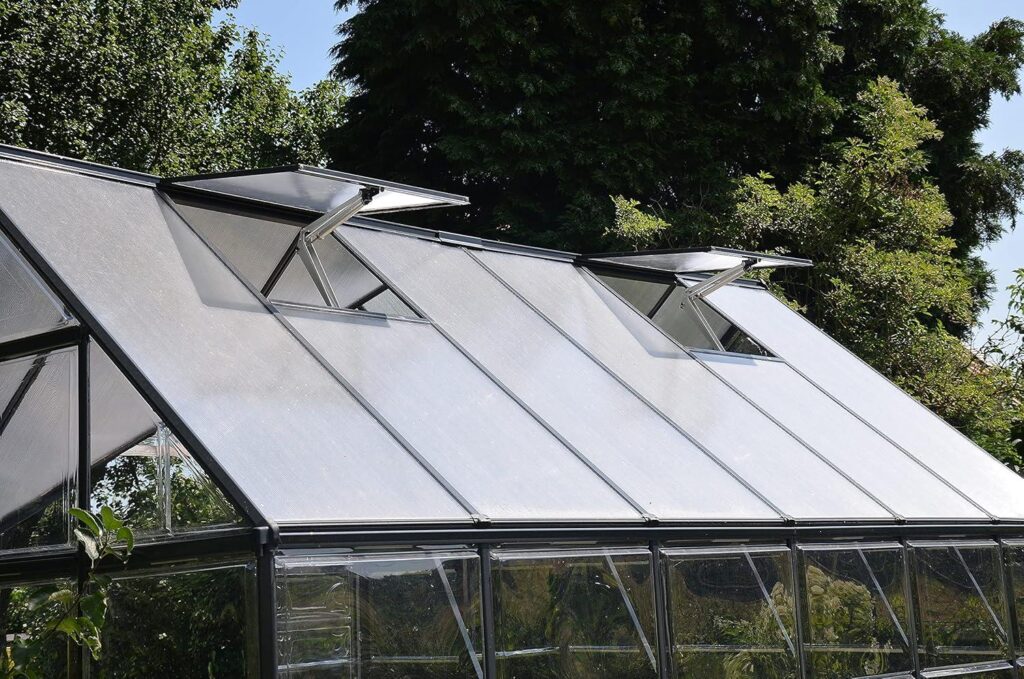
The system can be designed as:
- Ridge vents
- Roof windows
- Continuous roof vents
- Motorized roof openings
- Manual roof ventilation
- Rack-and-pinion ventilation
- Butterfly-style roof vents
- Customized ventilation structures
The exact configuration depends on the greenhouse structure, covering material, climate, and crop requirements.
Unlike a side opening, which mainly allows air to enter at a lower level, roof ventilation focuses on removing warm air from the highest point of the greenhouse.
Why Roof Ventilation Is Important
Solar radiation can cause greenhouse temperatures to rise significantly during sunny periods.
Even when outdoor temperatures are relatively comfortable, the air inside a greenhouse may become considerably warmer.
This is partly because warm air naturally rises.
Without sufficient upper ventilation, that hot air can remain trapped beneath the greenhouse roof.
A roof vent provides an escape path.
This creates a natural airflow pattern:
Cooler outdoor air → enters through lower openings → moves through the crop zone → warm air rises → exits through roof vents
When combined with side ventilation, the effect can be even stronger.
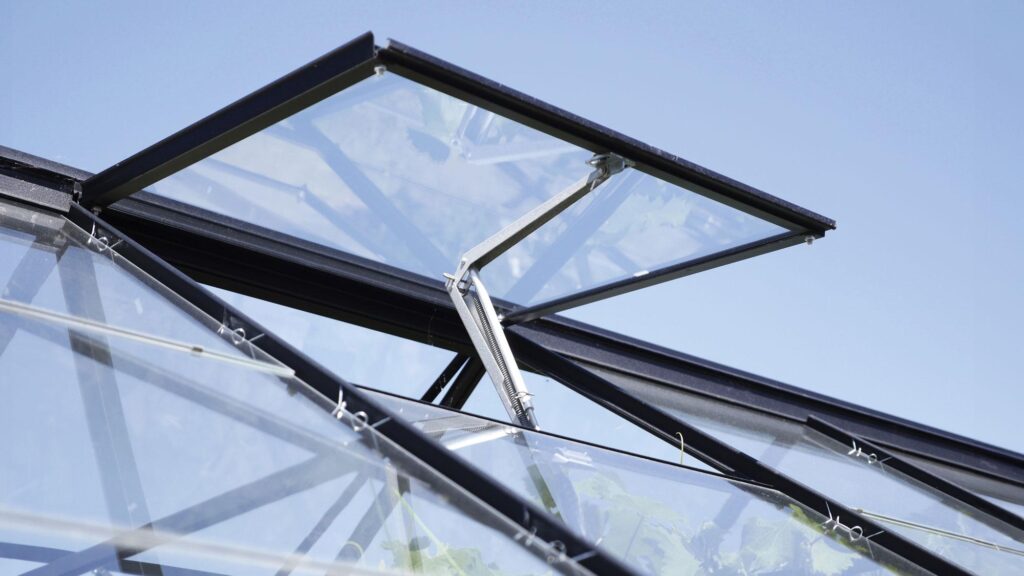
How Does a Greenhouse Roof Ventilation System Work?
The operating principle is based largely on thermal buoyancy.
As sunlight heats the greenhouse interior, the air temperature increases. Warm air becomes less dense and naturally moves upward.
When the roof vent is opened, this warm air can escape through the upper opening.
At the same time, cooler air can enter through side vents, doors, or other lower openings.
This creates a natural circulation path without requiring constant fan operation.
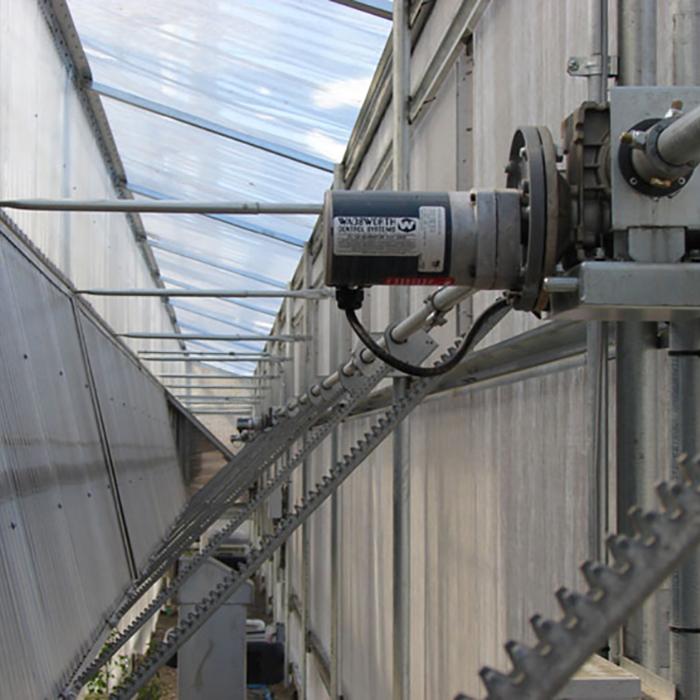
A typical automated system works in several stages:
1. Environmental Sensors Monitor Conditions
Temperature and humidity sensors continuously measure greenhouse conditions.
2. The Controller Compares Actual and Target Values
If the internal temperature rises above the configured target, the controller sends a ventilation command.
3. The Roof Vent Opens
A motorized actuator or gear system gradually opens the roof vent.
4. Hot Air Escapes
Warm air moves upward and exits through the roof opening.
5. The System Adjusts the Opening
As conditions change, the controller can increase, reduce, or close the opening.
This allows the greenhouse to respond continuously instead of relying on fixed ventilation positions.
Motorized Roof Ventilation
For commercial greenhouse projects, motorized ventilation offers a higher level of control.
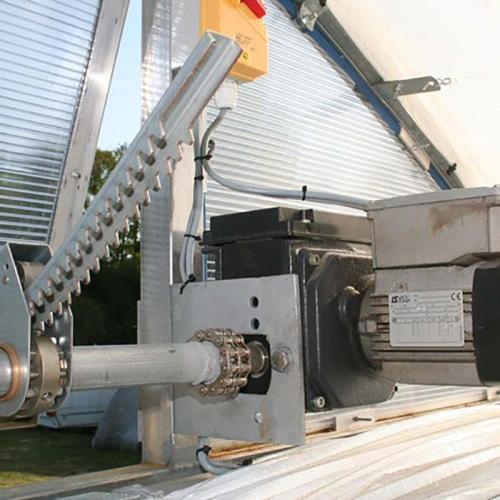
A motorized system can use an electric gear motor connected to a mechanical opening system.
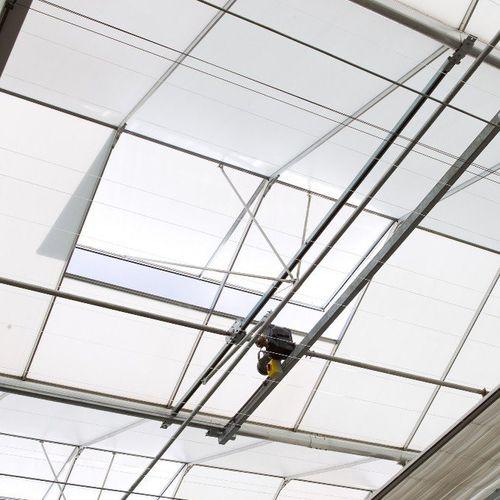
Depending on the greenhouse design, common configurations include:
- Gear motor
- Rack-and-pinion mechanism
- Push-pull actuator
- Ventilation shaft
- Connecting rods
- Hinges
- Limit switches
- Control box
The motor specification should be selected according to the size and weight of the roof ventilation structure.
For long greenhouse spans, proper mechanical design is particularly important because the system must open evenly along the entire ventilation section.
Natural Ventilation vs Mechanical Ventilation
A roof ventilation system is not necessarily a replacement for exhaust fans.
In many commercial projects, the best solution is to combine natural and mechanical ventilation.
| Natural Roof Ventilation | Mechanical Ventilation |
|---|---|
| Uses natural airflow | Uses electric fans |
| Lower operating energy | Higher electrical demand |
| Effective in suitable weather | Works when outdoor conditions are less favorable |
| Excellent for heat release | Provides controlled air movement |
| Requires suitable greenhouse design | Can provide stronger airflow |
| Works well with side vents | Works well with cooling pads |
For example, during a mild sunny day, roof and side vents may provide enough airflow without running exhaust fans continuously.
During extremely hot weather, the climate controller can close or partially close the natural ventilation system and activate mechanical cooling equipment according to the control strategy.
Greenhouse Roof Ventilation with Side Vents
The combination of roof and side ventilation is particularly effective.
Side ventilation provides an entry path for fresh air, while roof ventilation provides an exit path for warm air.
This creates a more complete airflow cycle.
Side Vent
Fresh air enters through the lower side of the greenhouse.
Crop Zone
Air moves across the plants, helping remove excess heat and humidity.
Roof Vent
Warm air rises and exits through the upper opening.
This arrangement can reduce the dependence on mechanical ventilation under suitable weather conditions.
For large commercial greenhouses, the roof and side ventilation systems can also be controlled independently.
That gives growers more flexibility when responding to different weather conditions.
Roof Ventilation and Humidity Management
Temperature is not the only reason to install roof ventilation.
Humidity is another major consideration.
High humidity can occur after:
- Irrigation
- Fertigation
- Rainfall
- High plant transpiration
- Dense crop growth
- Poor air circulation
If humid air remains trapped inside the greenhouse, condensation may occur on greenhouse surfaces and around plant leaves.
Opening roof vents can help release humid air and improve air exchange.
However, ventilation should be controlled carefully during cold or very humid outdoor conditions. Simply opening every vent as far as possible is not always the best strategy.
This is where automated climate control becomes valuable.
Roof Ventilation for Different Greenhouse Types
A roof ventilation system can be adapted to different greenhouse structures.
Glass Greenhouses
Large commercial glass greenhouses often use ridge vents or roof windows operated by mechanical opening systems.
Polycarbonate Greenhouses
PC panel greenhouses can also incorporate roof vents, although the vent structure must be designed around the panel configuration.
Film Greenhouses
Plastic-film greenhouses can use roof vents, roll-up openings, or specially designed ridge ventilation structures.
Multi-Span Greenhouses
Large multi-span structures may require multiple ventilation zones to maintain uniform environmental conditions.
Main Benefits of a Greenhouse Roof Ventilation System
1. Efficient Heat Removal
Hot air accumulates near the roof, making the roof an ideal location for releasing excess heat.
2. Better Air Exchange
Roof openings create a natural route for air to move through the greenhouse.
3. Humidity Reduction
Ventilation helps remove humid air generated by irrigation and plant transpiration.
4. Reduced Energy Consumption
Natural ventilation can reduce the operating time of mechanical fans when outdoor conditions are favorable.
5. Improved Crop Environment
More stable temperature and humidity conditions can support healthier and more uniform crop development.
6. Automated Operation
Motorized systems can be connected to sensors and climate controllers for automatic adjustment.
7. Flexible Ventilation
The opening angle can be adjusted rather than being limited to fully open or fully closed operation.
Important Factors When Choosing Roof Ventilation
A ventilation system should be designed according to the greenhouse rather than selected solely by motor power.
Greenhouse Width and Length
Larger structures may require multiple ventilation zones.
Roof Design
The roof angle, ridge configuration, and structural frame affect the ventilation mechanism.
Covering Material
Glass, PC panels, and greenhouse film require different installation methods.
Local Wind Conditions
Roof vents are exposed to outdoor weather and should be designed with appropriate structural strength.
Crop Requirements
Vegetables, flowers, seedlings, and other crops can have different environmental requirements.
Automation Level
Manual systems may work for smaller projects, while commercial facilities often benefit from automatic control.
Integration
The roof ventilation system should be compatible with other equipment, including:
- Side ventilation
- Exhaust fans
- Circulation fans
- Cooling pads
- Heating systems
- Shading systems
- Irrigation
- Fertigation
- Temperature sensors
- Humidity sensors
- Central climate controllers
Technical Parameters
| Parameter | Typical Specification |
|---|---|
| Ventilation Type | Roof / Ridge Ventilation |
| Operation | Manual / Motorized |
| Drive System | Gear Motor / Actuator |
| Opening Method | Rack & Pinion / Push-Pull / Customized |
| Vent Location | Roof / Ridge |
| Frame Material | Galvanized Steel / Aluminum |
| Covering | Glass / PC / Greenhouse Film |
| Opening Angle | Customized |
| Control | Manual / Timer / PLC |
| Temperature Sensor | Optional |
| Humidity Sensor | Optional |
| Wind Sensor | Optional |
| Rain Sensor | Optional |
| Automatic Control | Available |
| Ventilation Zones | Customized |
| Greenhouse Type | Single Span / Multi-Span |
| Application | Vegetable / Flower / Nursery / Hydroponic |
| OEM/ODM | Available |
Note: Final specifications should be determined according to greenhouse dimensions, roof structure, covering material, local climate, wind conditions, crop type, and required ventilation capacity.
Greenhouse Roof Ventilation System from Good Growing Tech
Good Growing Tech develops greenhouse equipment solutions for commercial growers, greenhouse contractors, and agricultural projects.
The roof ventilation system can be configured as an independent ventilation solution or incorporated into a complete climate-control package.
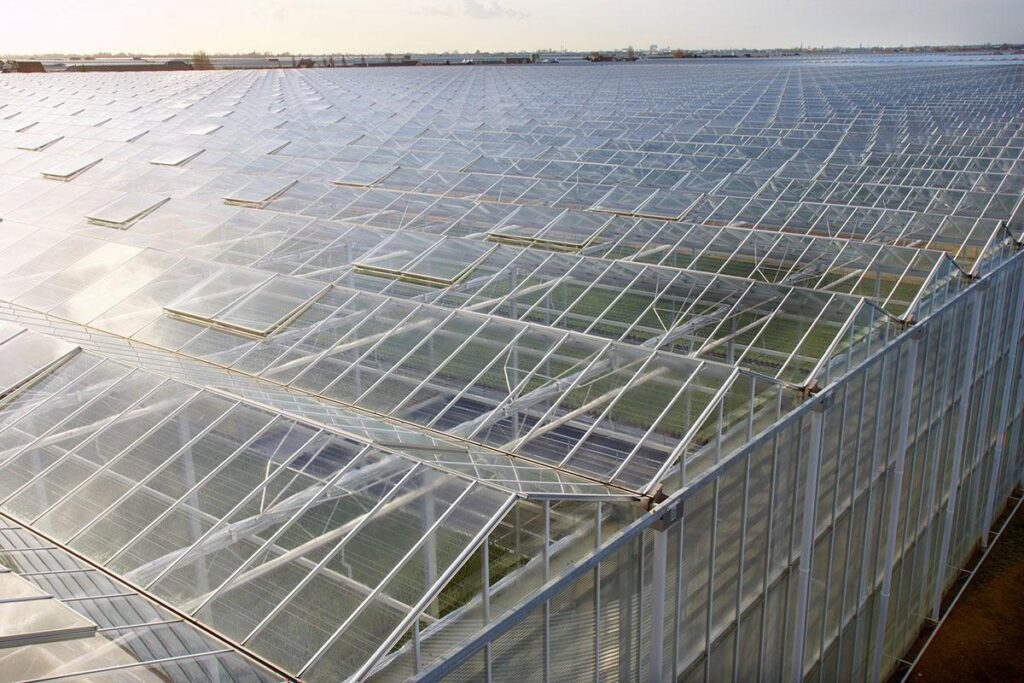
Depending on the project, the solution can include:
- Roof ventilation
- Ridge vents
- Motorized opening mechanisms
- Side ventilation
- Exhaust fans
- Cooling systems
- Shading systems
- Temperature and humidity sensors
- Automatic climate controllers
This project-based approach is particularly useful for greenhouse buyers who need equipment designed around the structure rather than a one-size-fits-all product.
FAQs:
What is the purpose of a greenhouse roof vent?
A roof vent allows hot and humid air to escape from the upper part of the greenhouse, improving natural ventilation and temperature management.
2. Is roof ventilation better than side ventilation?
They serve different functions. Side vents mainly provide lower-level air intake, while roof vents allow warm air to escape. Using both together can create a more effective natural airflow pattern.
3. Can greenhouse roof vents be automated?
Yes. Motorized roof vents can be connected to temperature, humidity, wind, and rain sensors and controlled through a greenhouse automation system.
4. Does roof ventilation reduce energy consumption?
It can. When outdoor conditions are suitable, natural ventilation can reduce the amount of time mechanical cooling and exhaust fans need to operate.
5. Can roof ventilation be used in a film greenhouse?
Yes. The ventilation design needs to match the film greenhouse structure and covering method.
6. What motor is used for automatic roof ventilation?
Electric gear motors or suitable linear actuators can be used depending on the ventilation mechanism, opening size, and structural load.
Conclusion
A well-designed greenhouse roof ventilation system provides a practical way to take advantage of natural airflow and remove heat from the upper part of a greenhouse.
For commercial growers, the greatest value comes when roof ventilation is designed as part of a complete environmental-control strategy. Combining roof vents with side ventilation, sensors, fans, cooling systems, and automated controls allows the greenhouse to respond more intelligently to changing weather and crop conditions.
For projects where temperature, humidity, energy consumption, and labor efficiency all matter, automated roof ventilation can be an important part of the overall greenhouse design.
Contact Good Growing Tech
📧 Email: arno@goodgrowingtech.com
🌐 Website: www.goodgrowingtech.com
📱 WhatsApp: +86 18056416155
🏢 Good Growing Tech – Professional Greenhouse Equipment & Smart Agriculture Solutions