Greenhouse Humidification System for Better Crop Environment Control
Humidity is one of the environmental factors that can easily be overlooked in greenhouse production. Growers often focus on temperature, irrigation, and light, but relative humidity can also have a significant effect on plant growth, water consumption, and the overall greenhouse environment.
When greenhouse air becomes too dry, plants may lose water more rapidly than expected. This can be particularly challenging in winter when heating systems are running or in dry climates where outdoor humidity is naturally low.
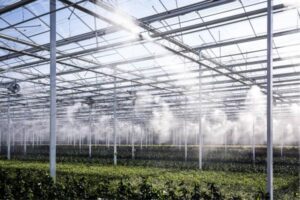
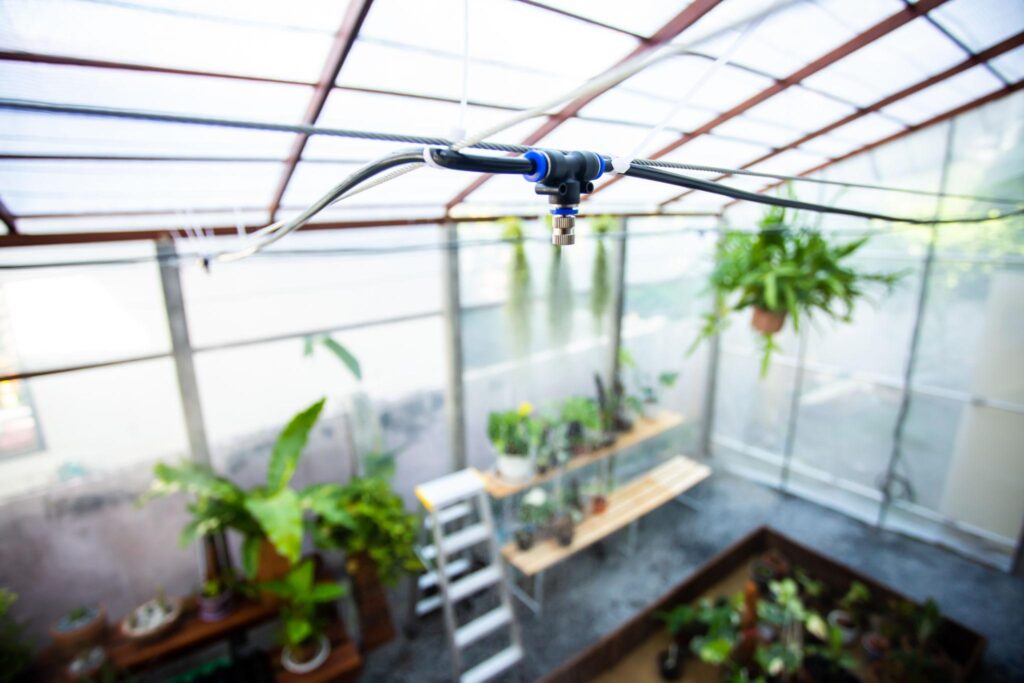
A greenhouse humidification system provides a controlled way to add moisture to the greenhouse environment. Depending on the application, the system can use fine mist, high-pressure fog, humidification nozzles, or other moisture-delivery technologies.
For commercial growers, the objective is not simply to make the greenhouse “more humid.” The real goal is to create a stable environment in which humidity can be adjusted according to crop requirements and coordinated with ventilation, heating, cooling, and irrigation systems.
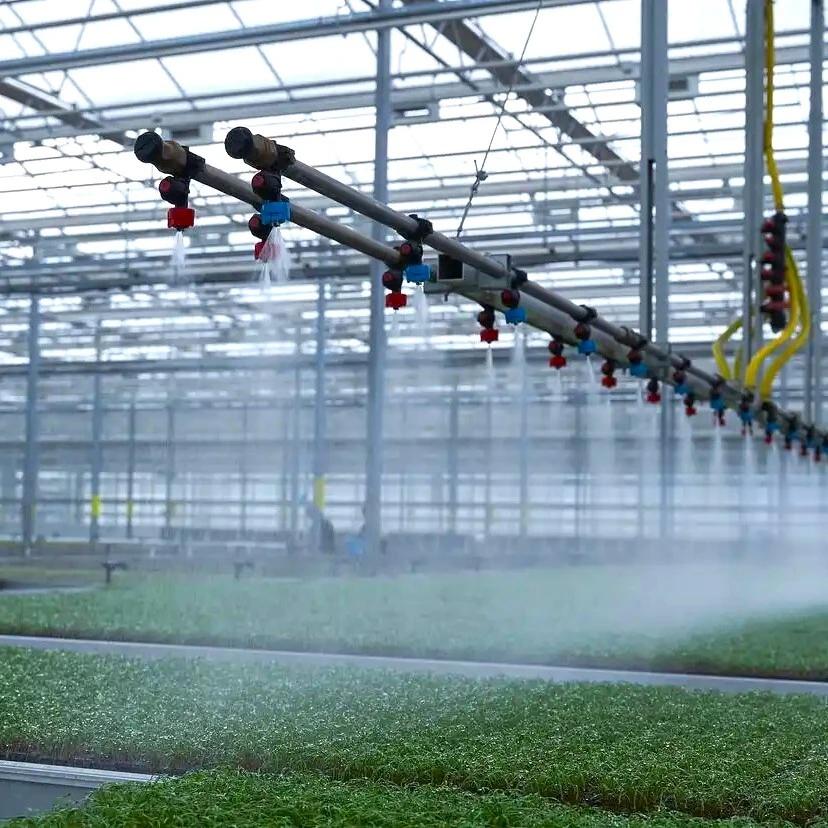
What Is a Greenhouse Humidification System?
A greenhouse humidification system adds controlled amounts of moisture to the air inside a greenhouse.
Depending on the design, water can be converted into very small droplets and distributed through the growing area using specialized nozzles or misting equipment.
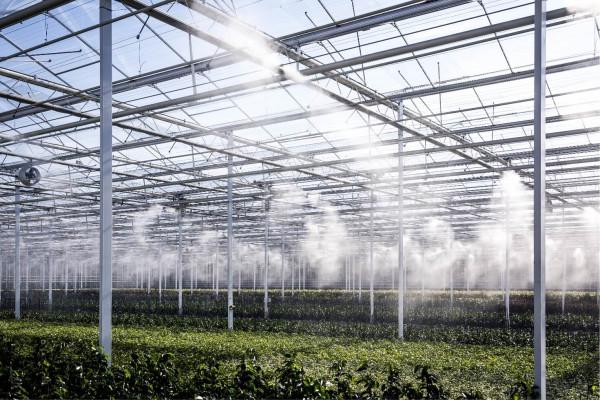
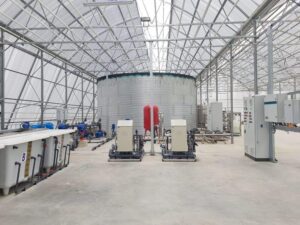
A typical system may include:
- Water supply
- Water filtration
- High-pressure pump
- Mist or fog nozzles
- Distribution pipes
- Solenoid valves
- Humidity sensors
- Temperature sensors
- Digital controller or PLC
- Automatic drainage or flushing components
- Optional remote monitoring
The equipment configuration depends on greenhouse size, crop type, water quality, required humidity level, and desired automation.
Why Humidity Control Matters in Greenhouse Production
Plants continuously exchange water with their surrounding environment. When greenhouse air is very dry, the difference between moisture inside plant tissues and the surrounding air can increase, potentially increasing water loss.
Controlled humidification can help growers manage this environment more precisely.
Reduce Excessively Dry Conditions
During cold weather, greenhouse heating can lower relative humidity considerably. A humidification system can compensate by adding controlled moisture.
Support Young Plants
Seedlings and propagation areas may require a carefully managed environment. Humidity control can be particularly useful during early plant development.
Improve Environmental Uniformity
Large greenhouses can develop differences between zones. Automated misting or fogging can help distribute moisture more consistently when properly designed.
Support Climate Management
Humidification is most effective when integrated with temperature, ventilation, and other environmental controls.
Reduce Manual Spraying
Instead of repeatedly adding water manually, an automated system can deliver moisture according to a programmed schedule or sensor reading.
How Does a Greenhouse Humidification System Work?
The basic operating principle is relatively simple.
Water Supply → Filtration → Pump → Distribution Pipe → Fine Mist/Fog Nozzle → Greenhouse Air
The water first passes through a filtration system. This is particularly important when using small misting nozzles because suspended particles can cause blockage.
The filtered water is then pressurized and delivered through a network of pipes. Specialized nozzles break the water into fine droplets.
A humidity sensor can monitor greenhouse conditions. When humidity drops below the programmed range, the controller can activate the humidification system.
Once the target condition is reached, the controller can stop or reduce humidification.
This automatic feedback process provides more consistent control than manually turning misting equipment on and off.
Main Types of Greenhouse Humidification
High-Pressure Fogging
High-pressure fogging systems produce very fine droplets that can evaporate rapidly under suitable environmental conditions.
They are commonly considered for commercial greenhouses where accurate humidity management and cooling assistance are required.
Fine Mist Systems
Fine mist systems use specialized nozzles to produce small water droplets. They can be used for propagation areas, nurseries, and general greenhouse humidity management.
Misting for Propagation
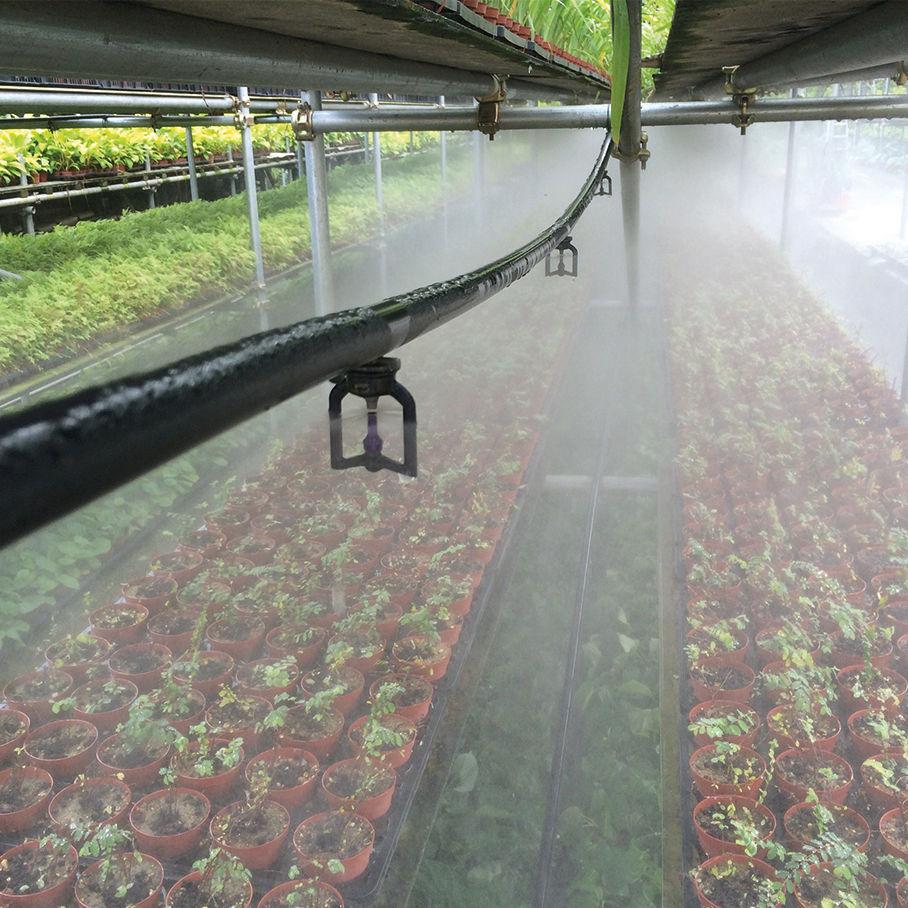
Plant propagation areas often require different environmental conditions from mature crop areas. A dedicated misting zone can therefore be installed above propagation benches or specific growing areas.
Combined Cooling and Humidification
Under suitable conditions, evaporative moisture systems can also contribute to cooling because water evaporation absorbs heat from the surrounding environment.
However, humidification and cooling should be designed according to local climate conditions. Adding moisture when outdoor humidity is already high may not provide the desired result.
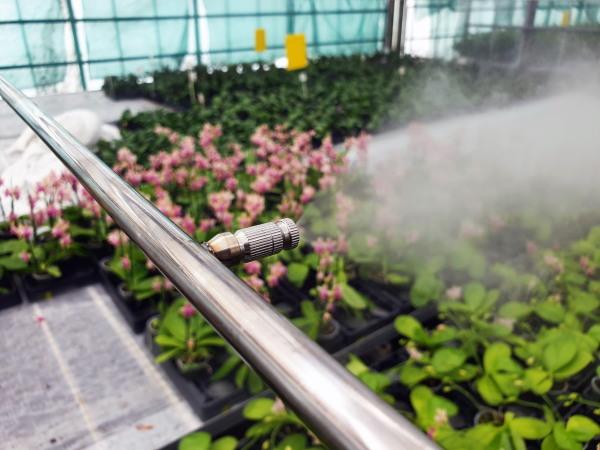
Greenhouse Humidification and Ventilation Must Work Together
One of the most important points when designing a humidification system is the relationship between moisture and ventilation.
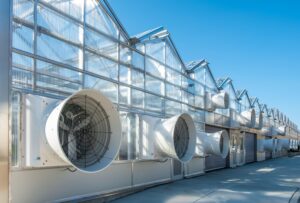
Adding water to the greenhouse does not automatically mean humidity will increase effectively. If ventilation is removing moist air too quickly, water consumption can increase without achieving stable humidity.
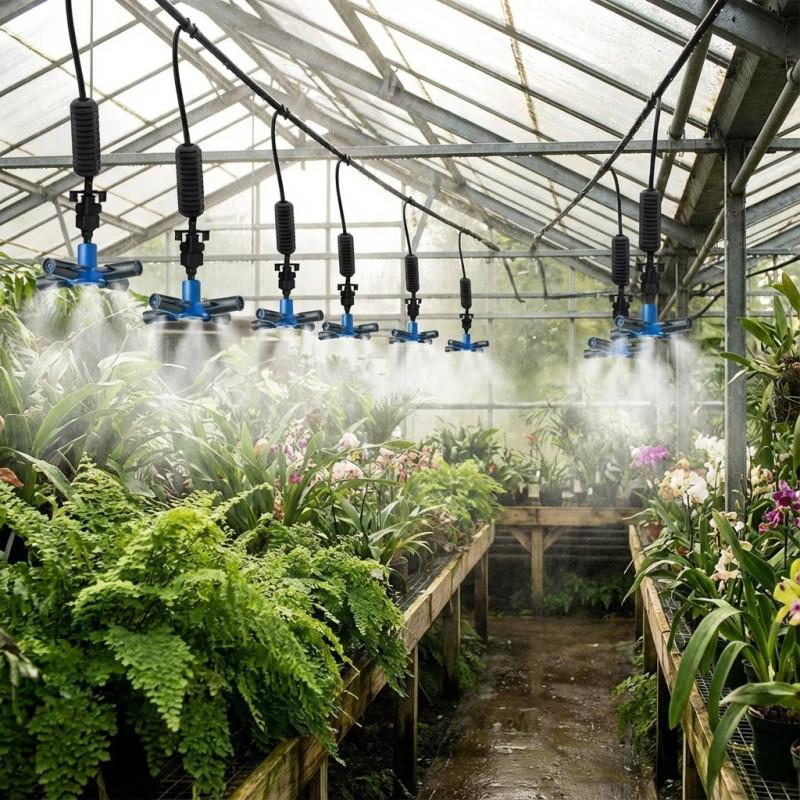
For this reason, a commercial greenhouse may coordinate:
- Humidification
- Exhaust fans
- Circulation fans
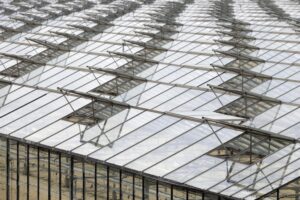
- Roof ventilation
- Side ventilation
- Heating
- Cooling pads
- Shading
- Temperature sensors
- Humidity sensors
For example, during a dry winter morning, the controller may reduce unnecessary ventilation while activating humidification. During a hot and humid afternoon, the control strategy may prioritize ventilation instead.
The objective is to manage the entire environment rather than operate each component independently.
Humidification for Greenhouse Propagation
Propagation is one of the most common applications for controlled misting.
Young cuttings and seedlings may have limited root development and can be more sensitive to moisture loss. A properly designed misting system can maintain a more suitable local environment around propagation trays.
Instead of running the entire greenhouse humidification system at the same frequency, growers can create separate propagation zones.
This provides greater control and can reduce unnecessary water consumption.
Humidification for Different Crops
The appropriate humidity strategy depends on the crop.
Vegetables
Vegetable greenhouses can use humidification to manage dry conditions, particularly during propagation or specific stages of production.
Flowers
Ornamental plants can have different humidity requirements depending on variety and growing stage.
Nursery Plants
Humidity management is especially useful in propagation and young-plant production.
Hydroponic Crops
Hydroponic systems already provide controlled root-zone water management, but the surrounding air still needs appropriate environmental control.
Research Greenhouses
Research facilities may require more precise environmental conditions and therefore benefit from sensor-based humidification control.
Choosing the Right Humidification System
Before selecting equipment, buyers should evaluate several factors.
Greenhouse Size
The greenhouse volume affects the required humidification capacity and nozzle distribution.
Local Climate
A dry climate may require more humidification capacity than a naturally humid region.
Crop Type
Different plants have different environmental preferences. The system should be designed around the actual crop rather than using a generic humidity target.
Water Quality
Fine nozzles are sensitive to water quality. Proper filtration can help reduce clogging and improve system reliability.
Nozzle Layout
Nozzles should be distributed to provide appropriate coverage without unnecessarily wetting leaves, structures, or equipment.
Automation
For commercial production, humidity sensors and automatic control can reduce manual intervention and improve consistency.
Water Quality and Filtration
Filtration is one of the most important parts of a humidification installation.
Fine mist nozzles have relatively small water passages. Suspended particles, mineral deposits, or other contaminants can cause blockage.
A commercial system may therefore include multiple filtration stages depending on the source water.
Regular maintenance should include:
- Cleaning filters
- Checking nozzle condition
- Flushing pipes
- Inspecting pump performance
- Checking pressure
- Cleaning mineral deposits
- Testing humidity sensors
Good water treatment and regular maintenance can significantly improve system reliability.
Smart Humidity Control
A modern greenhouse can connect humidification equipment to a central climate-control system.
A typical automated sequence could be:
- Humidity sensor detects a decrease.
- Controller compares the reading with the programmed range.
- Solenoid valve opens.
- Pump starts.
- Mist or fog is distributed through selected zones.
- Humidity rises.
- Controller stops the humidification cycle when the target condition is reached.
More advanced systems can also consider temperature, ventilation status, time schedules, and multiple greenhouse zones.
Technical Parameters
The following specifications are typical project references. Final equipment should be selected according to greenhouse volume, crop requirements, local climate, water quality, and system design.
| Parameter | Typical / Optional / Customized |
|---|---|
| System Type | Misting / Fogging / High-Pressure Humidification |
| Water Source | Tank / Well / Municipal / Customized |
| Pump Type | High-Pressure Pump / Customized |
| Nozzle Type | Fine Mist / Fog Nozzle |
| Filtration | Screen / Disc / Multi-Stage |
| Operating Pressure | Project Dependent |
| Nozzle Quantity | Customized |
| Pipe Material | PE / PVC / Stainless Steel / Customized |
| Humidity Sensor | Optional / Automatic System |
| Temperature Sensor | Optional |
| Solenoid Valve | Optional / Zone Control |
| Controller | Digital Controller / PLC |
| Control Mode | Manual / Timer / Automatic |
| Humidification Zones | Customized |
| Remote Monitoring | Optional |
| Communication | RS485 / Internet / Customized |
| Installation | Ceiling / Truss / Propagation Area / Customized |
| Application | Greenhouse / Nursery / Propagation |
| OEM/ODM | Available |
Maintenance and Operating Tips
A humidification system should be maintained as part of the greenhouse’s regular equipment schedule.
Clean the filters regularly. Dirty filters can reduce water flow and increase pressure loss.
Inspect misting nozzles. Uneven spray patterns may indicate blockage or nozzle wear.
Flush the pipe network. Regular flushing helps remove deposits from the system.
Check humidity sensors. Sensor accuracy is important because incorrect readings can cause excessive or insufficient humidification.
Inspect pumps and valves. Unusual noise, pressure changes, or leakage should be investigated promptly.
Avoid unnecessary humidification. More humidity is not automatically better. The system should operate according to the actual crop and environmental requirements.
Good Growing Tech Greenhouse Humidification Solutions
Good Growing Tech provides greenhouse equipment and climate-control solutions for commercial agriculture, including ventilation, cooling, heating, irrigation, fertigation, shading, and environmental control.
A humidification system can be designed as an independent solution or integrated into a complete greenhouse climate-control project.
Depending on the project, the system can include misting or fogging equipment, filtration, pumps, sensors, automatic valves, and centralized control.
The final configuration can be customized according to greenhouse dimensions, crop type, climate, water source, and automation requirements.
FAQs:
What is a greenhouse humidification system used for?
It adds controlled moisture to greenhouse air when humidity is too low for the intended growing conditions.
Is a fogging system the same as a humidification system?
They can overlap. Fogging equipment can be used for humidification, while some fogging systems are also designed to provide evaporative cooling.
Can greenhouse humidification be automated?
Yes. Humidity sensors, controllers, pumps, and solenoid valves can be integrated for automatic operation.
Does humidification require water filtration?
For systems using fine mist or fog nozzles, filtration is strongly recommended because small particles and mineral deposits can cause nozzle blockage.
Can humidification be combined with cooling?
Yes. Under suitable environmental conditions, evaporative fogging can contribute to cooling. The control strategy should consider both temperature and humidity.
Is humidification suitable for hydroponic greenhouses?
Yes. Hydroponic systems control water and nutrients around the roots, while humidification manages moisture conditions in the surrounding air.
Conclusion
A properly designed greenhouse humidification system gives commercial growers another important tool for managing the growing environment. By combining controlled mist or fog delivery with humidity sensors, filtration, automatic valves, and climate-control equipment, growers can respond more precisely to dry greenhouse conditions.
The ideal solution depends on greenhouse size, crop type, climate, water quality, ventilation strategy, and the desired level of automation. Rather than selecting equipment based only on pump capacity or nozzle quantity, the complete greenhouse environment should be considered.
Contact Us
Looking for a customized humidification solution for your greenhouse project? Contact Good Growing Tech for system design and equipment support.
📧 Email: arno@goodgrowingtech.com
🌐 Website: www.goodgrowingtech.com
📱 WhatsApp: +86 18056416155