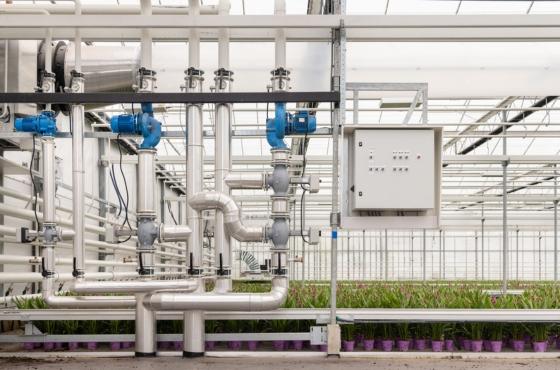
Why a Greenhouse Irrigation System Is the Key to Efficient Crop Production
Water is one of the most valuable resources in agriculture, and how it is delivered can directly influence crop health, productivity, and operating costs. Traditional manual watering often results in uneven irrigation, wasted water, and inconsistent plant growth.
As commercial agriculture becomes increasingly automated, more growers are investing in a greenhouse irrigation system to improve precision, reduce labor requirements, and maximize production efficiency.
A modern irrigation system delivers the right amount of water and nutrients directly to plant roots at the right time. This not only improves crop performance but also reduces resource waste, making greenhouse production more sustainable and profitable.
Whether growing vegetables, flowers, herbs, seedlings, or hydroponic crops, an intelligent irrigation solution has become an essential part of every professional greenhouse.
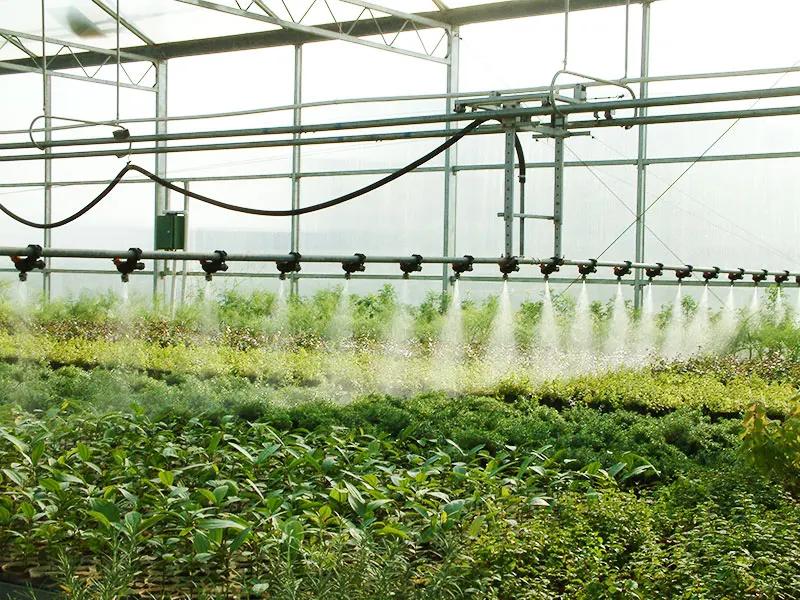

What Is a Greenhouse Irrigation System?
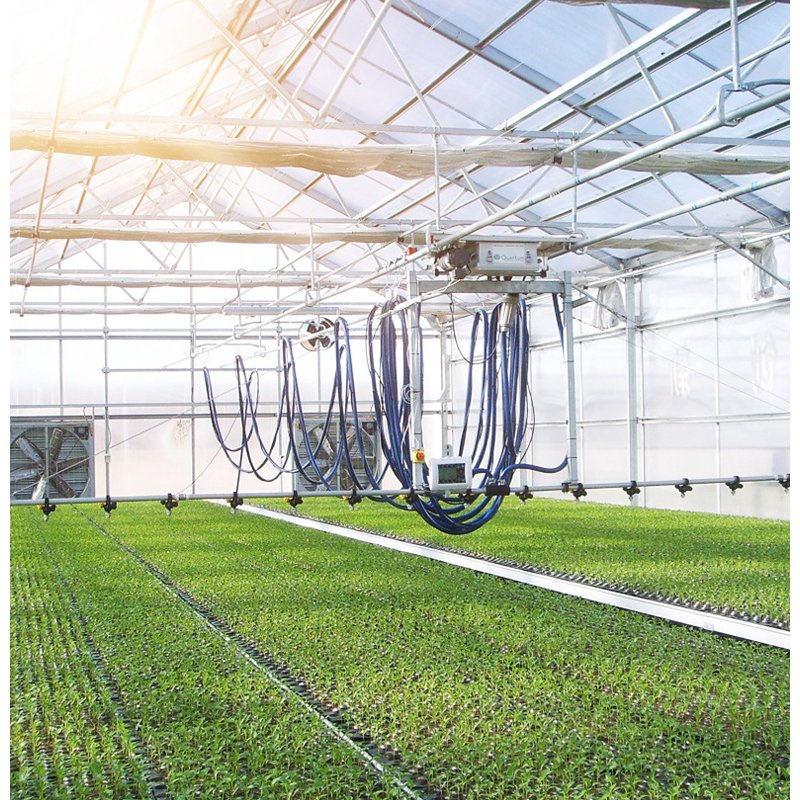
A greenhouse irrigation system is an integrated watering solution that supplies water and nutrients to crops automatically or semi-automatically.
Unlike traditional irrigation methods, greenhouse systems are designed to deliver accurate water volumes based on crop requirements and environmental conditions.
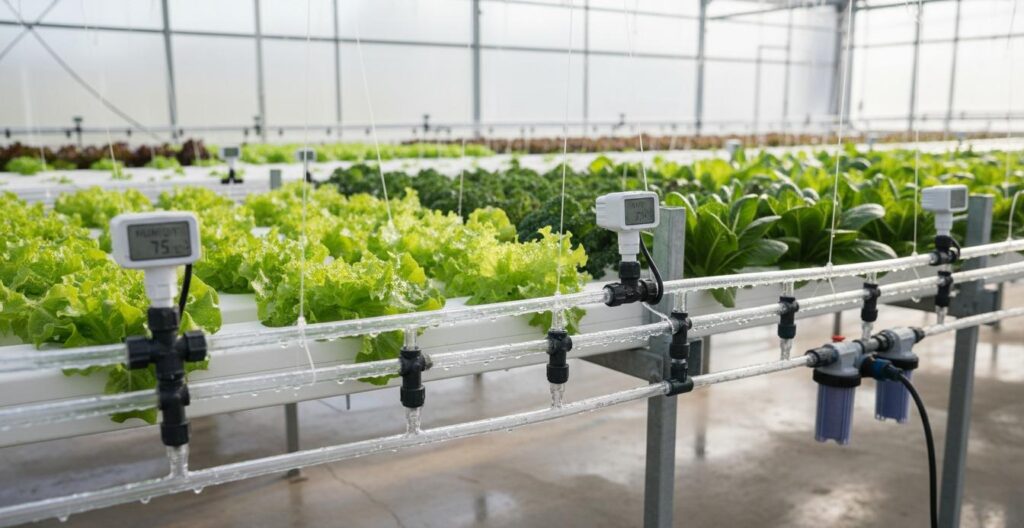
A complete irrigation system typically includes:
- Drip irrigation lines
- Sprinkler irrigation equipment
- Fertigation units
- Water pumps
- Filtration systems
- Valves and pipelines
- Moisture sensors
- Smart irrigation controllers
These components work together to ensure every plant receives consistent irrigation throughout its growth cycle.
Why Commercial Growers Prefer Automated Irrigation
Precision Water Delivery
One of the biggest advantages of a greenhouse irrigation system is precision.
Instead of watering an entire growing area, water is delivered exactly where plants need it.
Benefits include:
- Improved root development
- Reduced evaporation
- Lower water consumption
- Healthier crops
Lower Labor Costs
Manual irrigation requires significant labor, especially in large commercial greenhouses.
Automatic irrigation systems can:
- Start watering automatically
- Follow scheduled programs
- Adjust watering time
- Reduce manual intervention
This allows growers to focus on crop management rather than daily watering.
Better Nutrient Management
Many irrigation systems integrate fertigation technology.
This allows fertilizers to mix with irrigation water, providing plants with balanced nutrients throughout each growth stage.
Advantages include:
- Uniform fertilizer application
- Reduced nutrient waste
- Faster plant growth
- Higher production quality
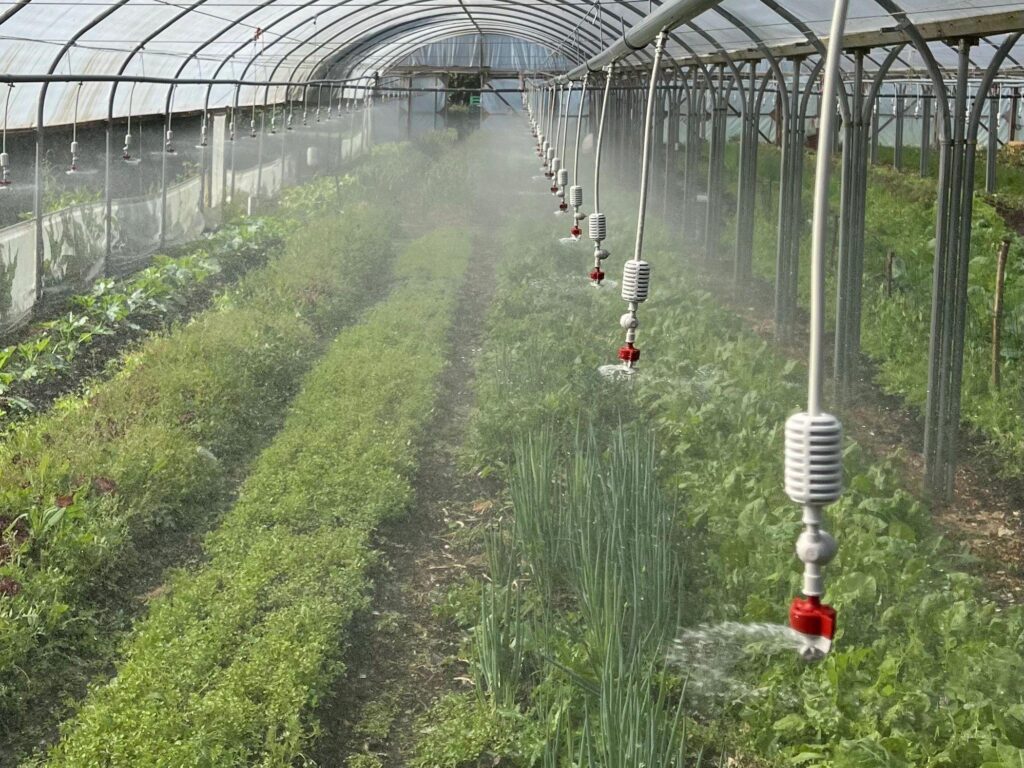
Types of Greenhouse Irrigation Systems
Drip Irrigation System
Drip irrigation is one of the most popular solutions for commercial greenhouse production.
Water flows slowly through emitters positioned near plant roots.
Advantages:
- Excellent water efficiency
- Reduced evaporation
- Precise irrigation
- Suitable for vegetables, flowers, and fruit crops
Sprinkler Irrigation System
Sprinkler systems distribute water evenly over larger planting areas.
They are suitable for:
- Seedling production
- Leafy vegetables
- Flower cultivation
- Nursery operations
Benefits include:
- Uniform water coverage
- Easy installation
- Flexible layout
Fertigation System
Fertigation combines irrigation and fertilizer delivery into one system.
The controller automatically mixes nutrients with irrigation water.
This technology improves:
- Nutrient absorption
- Fertilizer efficiency
- Plant consistency
- Production quality
Hydroponic Irrigation System
Hydroponic greenhouses require specialized irrigation equipment.
These systems continuously circulate nutrient-rich water while maintaining accurate EC and pH levels.
Suitable for:
- Lettuce
- Herbs
- Strawberries
- Tomatoes
- Vertical farming
Smart Irrigation for Modern Greenhouses
Today’s commercial greenhouses increasingly rely on automation.
A smart greenhouse irrigation system can connect with:
- Soil moisture sensors
- Weather stations
- Temperature sensors
- Fertigation controllers
- Mobile monitoring platforms
The system automatically adjusts irrigation schedules according to crop demand and environmental conditions.
This results in:
- Higher efficiency
- Reduced operating costs
- Better water conservation
- More consistent crop growth
Applications of Greenhouse Irrigation Systems
Professional irrigation solutions are suitable for many agricultural industries.
Vegetable Production
- Tomatoes
- Cucumbers
- Bell peppers
- Lettuce
- Spinach
Flower Cultivation
- Roses
- Tulips
- Orchids
- Chrysanthemums
Nursery Production
- Seedlings
- Young plants
- Tree propagation
Hydroponic Farming
- Leafy greens
- Herbs
- Indoor farming projects
Research Greenhouses
Accurate irrigation supports scientific testing and controlled experiments.
Technical Parameters
| Item | Specification |
|---|---|
| Irrigation Type | Drip / Sprinkler / Fertigation |
| Water Source | Tank / Municipal / Well Water |
| Pump Type | Automatic Booster Pump |
| Filtration | Sand Filter / Disc Filter |
| Control | Manual / Automatic PLC |
| Sensor Support | Soil Moisture / Temperature |
| Fertigation | Available |
| Application | Commercial Greenhouse |
| Custom Design | Yes |
Why Choose Good Growing Tech Irrigation Solutions?
Good Growing Tech provides complete irrigation engineering solutions for greenhouse agriculture.
Our services include:
✔ Drip irrigation systems
✔ Sprinkler irrigation systems
✔ Fertigation equipment
✔ Water filtration systems
✔ Smart irrigation controllers
✔ Customized greenhouse engineering
✔ Turnkey agricultural projects
Every greenhouse project is designed according to crop type, greenhouse size, water quality, and local climate to achieve maximum efficiency.
FAQs:
What is the best greenhouse irrigation system?
The ideal solution depends on crop type. Drip irrigation is preferred for vegetables and fruit crops, while sprinkler systems are often used for seedlings and flowers.
How much water can drip irrigation save?
Compared with traditional watering methods, drip irrigation can significantly reduce water consumption while improving irrigation accuracy.
Can irrigation and fertilization work together?
Yes. Fertigation systems combine water and nutrients, allowing plants to receive balanced nutrition automatically.
Is an automatic irrigation system suitable for large commercial greenhouses?
Absolutely. Automated systems improve consistency, reduce labor costs, and simplify greenhouse management.
Can the irrigation system be customized?
Yes. Good Growing Tech designs customized irrigation solutions based on greenhouse size, crop requirements, water source, and production goals.
Conclusion
A professional greenhouse irrigation system is one of the most valuable investments for modern greenhouse farming. By combining precision watering, fertigation, and intelligent automation, growers can improve crop quality, conserve water, and reduce operating costs.
Whether you are building a vegetable greenhouse, flower nursery, hydroponic farm, or large-scale agricultural project, a customized irrigation solution will help create a more productive and sustainable growing environment.
Contact Us
📧 Email: arno@goodgrowingtech.com
🌐 Website: www.goodgrowingtech.com
📱 WhatsApp: +86 18056416155
🏢 Good Growing Tech – Professional Greenhouse Irrigation & Smart Agriculture Solutions