Why More Growers Are Choosing a Container Vegetable Farming System
Global demand for fresh vegetables continues to rise, while challenges such as climate change, water shortages, labor costs, and limited farmland are making traditional agriculture increasingly difficult. To overcome these issues, commercial growers are investing in the container vegetable farming system, an innovative solution that combines controlled-environment agriculture with intelligent automation.
Unlike conventional farming, a container vegetable farming system provides a fully enclosed growing environment where every factor influencing plant growth can be carefully managed. Temperature, humidity, lighting, irrigation, nutrient delivery, and airflow are all optimized to create ideal growing conditions throughout the year.
This technology allows producers to supply fresh vegetables consistently, regardless of outdoor weather or seasonal limitations.
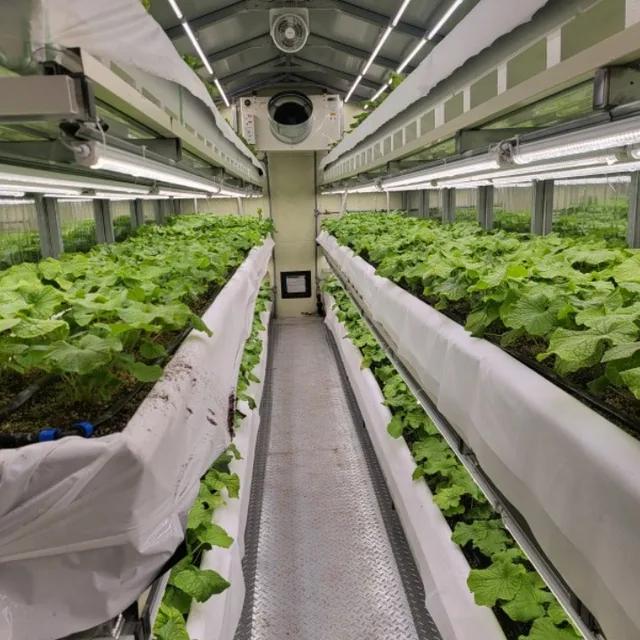

What Is a Container Vegetable Farming System?
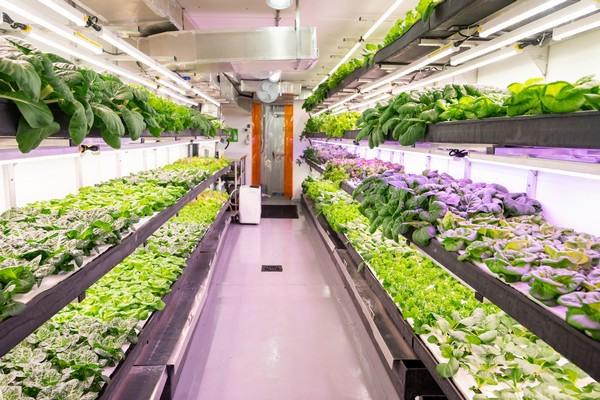
A container vegetable farming system is a modular indoor farming solution built inside an insulated shipping container. Every growing component is integrated into one complete production unit.
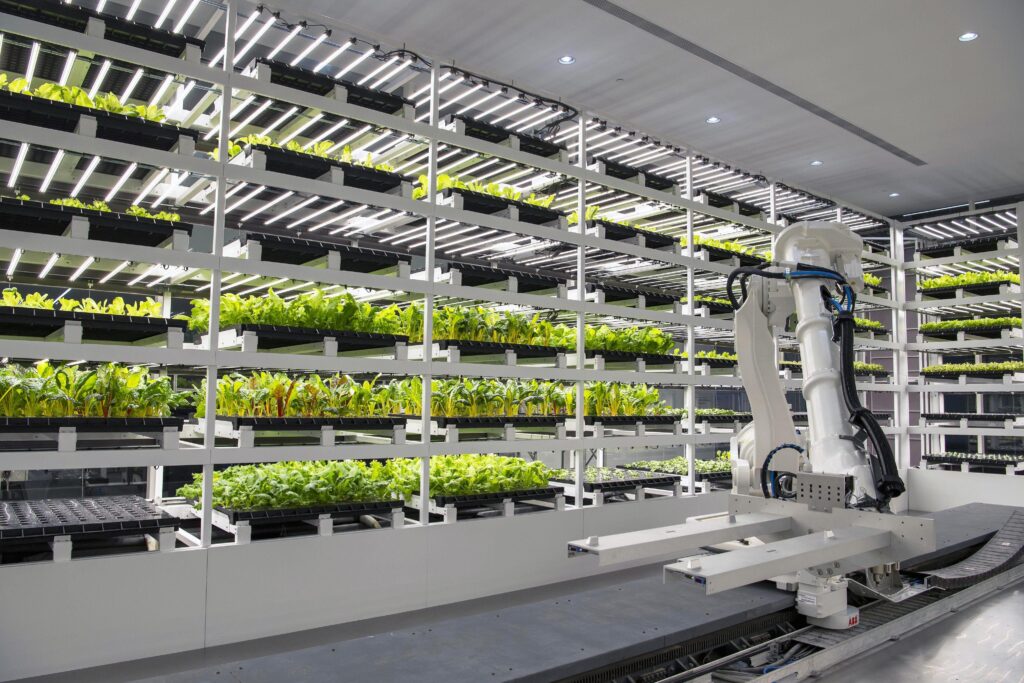
The system commonly includes:
- Full-spectrum LED grow lights
- Automated hydroponic or drip irrigation
- Climate control system
- Humidity management
- CO₂ supplementation
- Environmental monitoring
- Multi-layer growing racks
- Smart control software
Because everything is pre-installed, growers can begin production much faster than constructing a traditional greenhouse.
Produce Fresh Vegetables Every Season
Seasonal production is one of the biggest limitations in traditional agriculture. Cold winters, excessive summer temperatures, storms, and droughts can interrupt harvest schedules.
A container vegetable farming system removes these limitations by maintaining stable indoor conditions 365 days a year.
Growers can continuously produce leafy greens, herbs, tomatoes, strawberries, cucumbers, peppers, and many other crops without depending on outdoor weather.
For supermarkets, restaurants, wholesalers, and food distributors, year-round production means a more reliable supply chain and improved customer satisfaction.
Higher Productivity Through Vertical Farming
One of the greatest advantages of a container vegetable farming system is efficient space utilization.
Instead of growing crops on a single ground level, vertical cultivation racks multiply production capacity inside the same footprint.
Benefits include:
- Higher yield per square meter
- Better organization
- Easier harvesting
- More efficient lighting distribution
- Simplified crop management
This makes container farming particularly attractive for urban agriculture where land availability is limited.
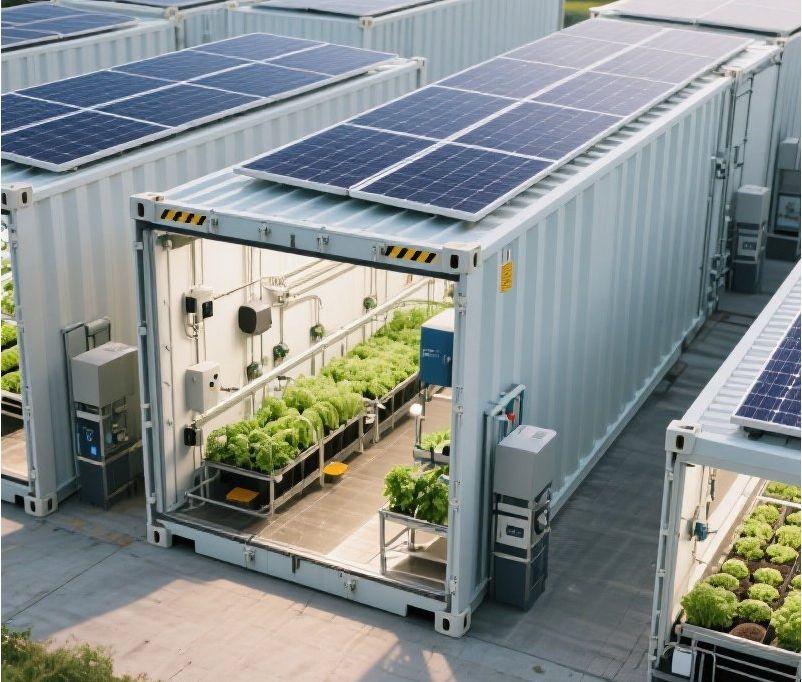
Water-Saving Irrigation Supports Sustainable Agriculture
Water conservation has become one of the most important goals in modern farming.
Compared with traditional field irrigation, a container vegetable farming system can dramatically reduce water consumption by using recirculating hydroponic or precision drip irrigation technology.
Water is delivered directly to plant roots, reducing evaporation and runoff while improving nutrient absorption.
Many commercial operations report significant reductions in water usage compared with conventional farming methods.
Intelligent Environmental Control Improves Crop Quality
Every vegetable species requires different environmental conditions throughout its growth cycle.
Modern container farms use intelligent automation to continuously monitor:
- Temperature
- Relative humidity
- CO₂ concentration
- EC
- pH
- Lighting intensity
- Irrigation timing
The container vegetable farming system automatically adjusts these parameters to create optimal growing conditions with minimal manual intervention.
Automation also improves production consistency while reducing labor costs.
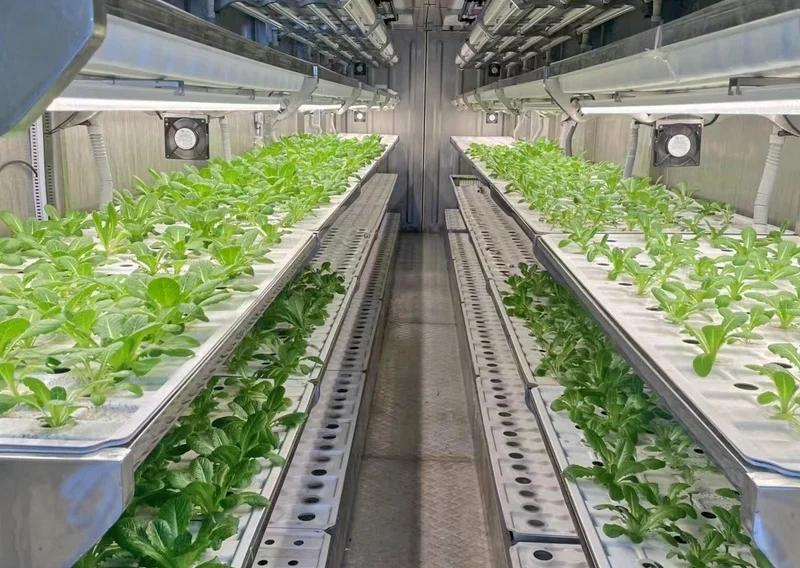
Flexible Deployment for Different Agricultural Projects
Another major advantage is mobility.
Unlike permanent agricultural buildings, a container vegetable farming system can be installed almost anywhere, including:
- Urban farming centers
- Commercial greenhouses
- Distribution hubs
- Universities
- Research institutions
- Food production facilities
- Remote communities
Additional production capacity can simply be achieved by adding more containers, making expansion much easier than conventional construction.
Technical Specifications
| Item | Specification |
|---|---|
| Container Size | 20FT / 40FT |
| Growing Method | Hydroponic / NFT / DWC |
| Lighting | Full Spectrum LED |
| Climate Control | Intelligent HVAC |
| Irrigation | Automatic |
| Control System | PLC + Touch Screen |
| Structure | Galvanized Steel |
| Environmental Monitoring | Smart Sensors |
| Expansion | Modular |
| Customization | Available |
Why Container Farming Is Becoming the Future of Vegetable Production
Consumer expectations are changing. Buyers now demand vegetables that are fresh, clean, pesticide-controlled, and available throughout the year.
A container vegetable farming system addresses these expectations while helping growers improve operational efficiency.
The combination of precision irrigation, intelligent automation, vertical cultivation, and environmental control allows commercial producers to deliver high-quality vegetables with greater consistency than traditional farming.
As technology continues advancing, container farming is expected to become an increasingly important part of global food production.
FAQs:
What vegetables can be grown in a container vegetable farming system?
Most leafy greens, herbs, tomatoes, cucumbers, peppers, strawberries, kale, spinach, basil, and many specialty vegetables can be successfully cultivated.
Does the system require soil?
No. Most systems use hydroponic growing methods, eliminating the need for traditional soil.
How much water can be saved?
Depending on crop type and irrigation method, water consumption can often be reduced by up to 80–90% compared with conventional farming.
Can the system be customized?
Yes. Lighting configuration, shelving layout, irrigation method, climate control, and automation can all be customized according to your project requirements.
Is it suitable for commercial production?
Absolutely. Container vegetable farming systems are widely used by commercial farms, distributors, research facilities, and urban agriculture projects around the world.
Contact Us
📧 Email: arno@goodgrowingtech.com
🌐 Website: www.goodgrowingtech.com
📱 WhatsApp: +86 18056416155
🏢 Good Growing Tech – Smart Container Farming Solutions for Modern Agriculture