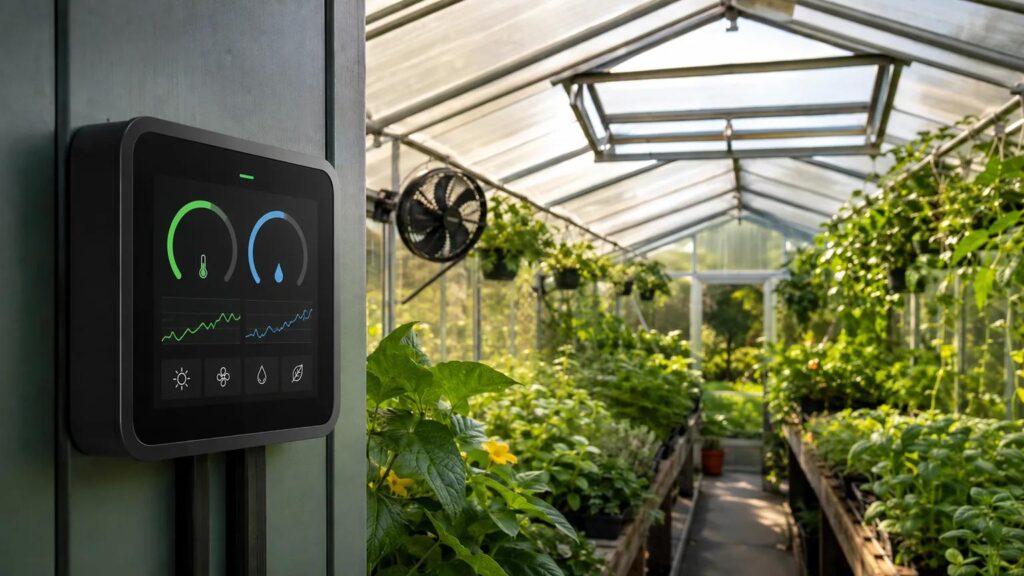
Why a Greenhouse Ventilation System Is Essential for Modern Agriculture
Maintaining the right growing environment is one of the biggest challenges in commercial greenhouse production. While greenhouses protect crops from extreme weather conditions, they can also create problems such as excessive heat, high humidity, and poor air circulation.
Without proper airflow management, plants may experience:
- Heat stress
- Slow growth
- Increased disease risk
- Uneven development
- Reduced production quality
This is why professional growers invest in a reliable greenhouse ventilation system to maintain stable environmental conditions.
A well-designed ventilation system improves air exchange, regulates temperature, controls humidity, and creates healthier conditions for crops.
For commercial farms, ventilation is not simply an accessory—it is one of the key systems that directly affects production efficiency and crop performance.
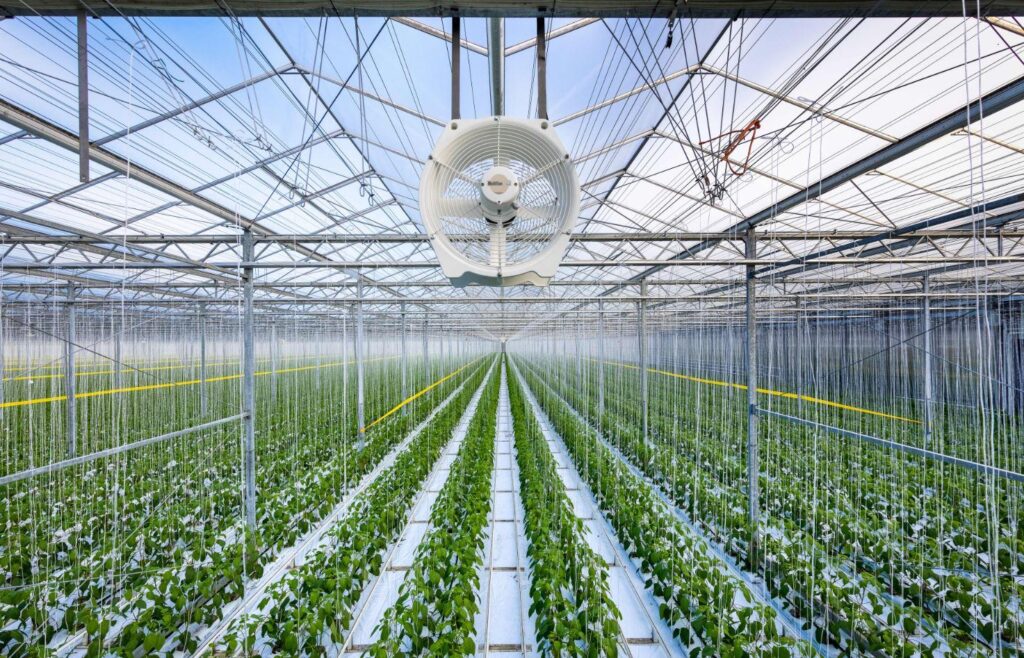
What Is a Greenhouse Ventilation System?
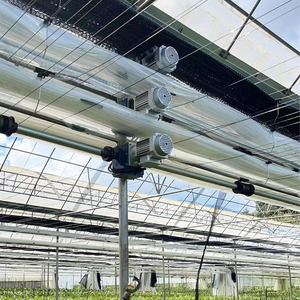
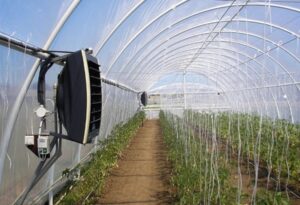
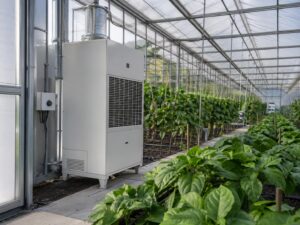
A greenhouse ventilation system is a combination of mechanical and natural ventilation equipment designed to regulate air movement inside a greenhouse.
The main purpose is to replace hot, humid air with fresh air from outside while maintaining suitable growing conditions.
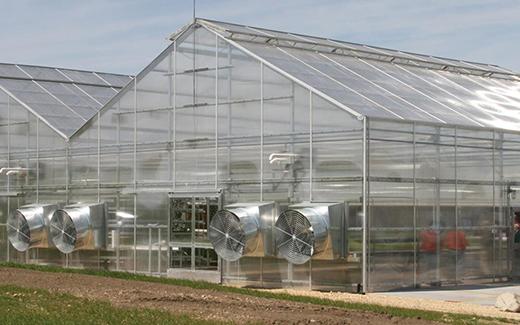
A complete ventilation solution may include:
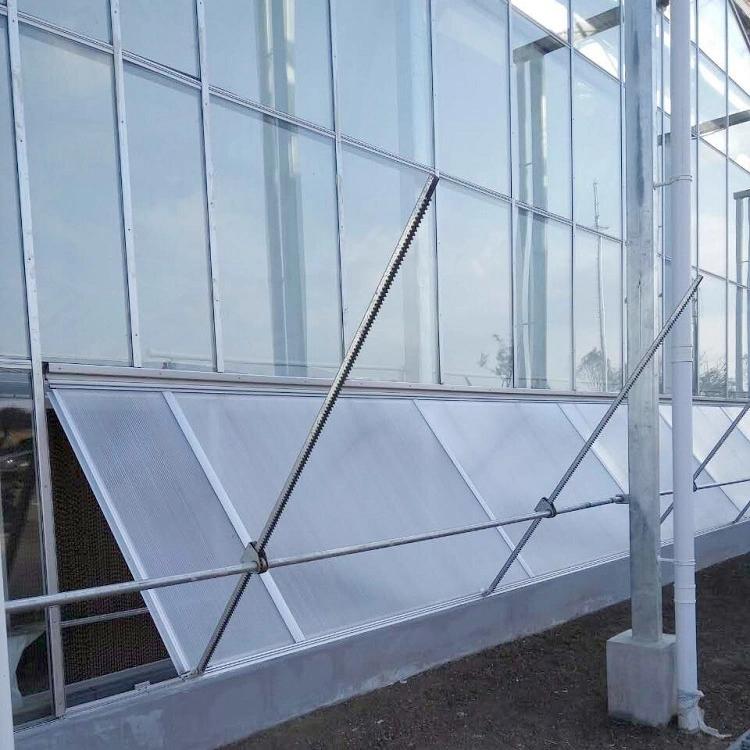
- Roof ventilation windows
- Side ventilation systems
- Exhaust fans
- Air circulation fans
- Automatic window openers
- Climate controllers
- Temperature and humidity sensors
These components work together to create a balanced indoor environment.
How Greenhouse Ventilation Improves Plant Growth
Plants require more than sunlight and water. Proper air movement is essential for healthy development.
A professional greenhouse ventilation system improves several important growing factors.
1. Temperature Regulation
During sunny days, greenhouse temperatures can rise quickly.
Excessive heat can cause:
- Leaf curling
- Flower drop
- Reduced photosynthesis
- Slow growth
Ventilation removes hot air and introduces cooler fresh air, helping maintain optimal temperatures.
2. Humidity Control
High humidity is a common problem in greenhouse environments.
Excess moisture can increase the risk of:
- Fungal diseases
- Mold growth
- Root problems
Improved ventilation helps remove excess moisture and maintains healthier humidity levels.
3. Better Carbon Dioxide Distribution
Plants require CO₂ for photosynthesis.
Poor airflow may create uneven CO₂ distribution, limiting plant growth.
A well-designed ventilation system ensures fresh air circulation throughout the greenhouse, improving photosynthesis efficiency.
4. Stronger Plant Development
Air movement helps strengthen plant structures.
Gentle airflow encourages:
- Stronger stems
- Better transpiration
- Improved nutrient absorption
This is especially important for commercial vegetable and flower production.
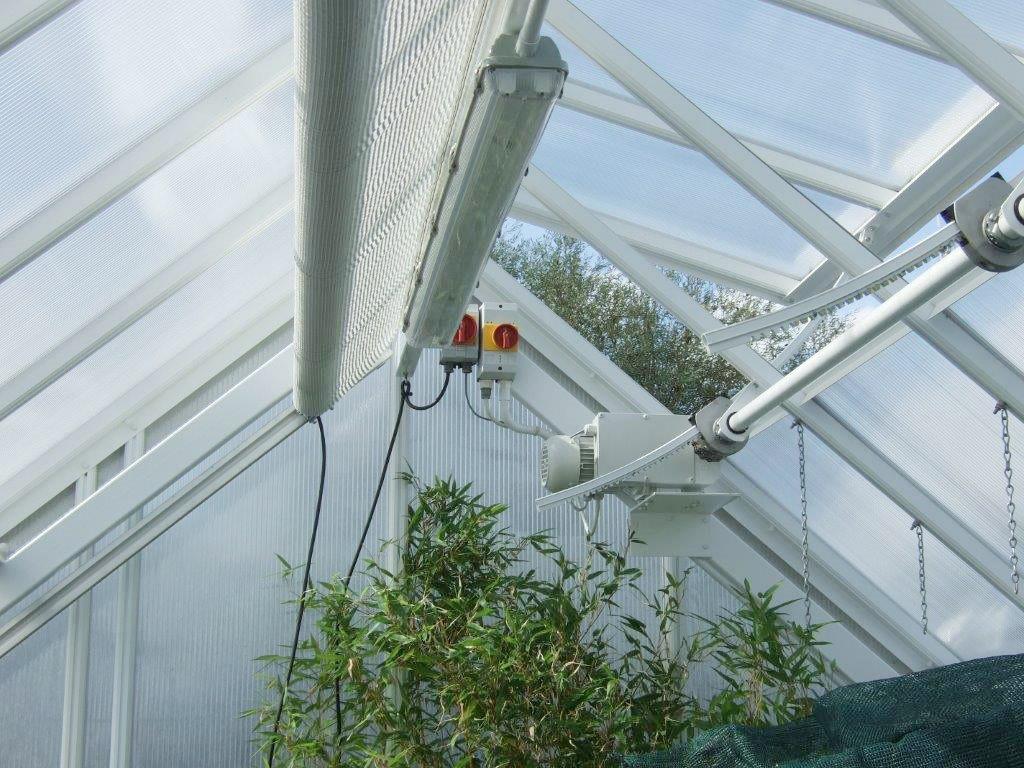
Different Types of Greenhouse Ventilation Systems
Commercial growers can choose different ventilation solutions depending on greenhouse design and climate conditions.

Natural Ventilation System
Natural ventilation uses roof vents and side openings to create airflow through temperature differences.
Advantages:
- Low energy consumption
- Simple operation
- Reduced maintenance costs
Suitable for:
- Mild climates
- Small and medium greenhouses
- Traditional agricultural projects
Mechanical Ventilation System
Mechanical ventilation uses fans to actively control air exchange.
Main components include:
- Exhaust fans
- Circulation fans
- Controllers
Advantages:
- Strong airflow
- Precise control
- Suitable for large greenhouses
Commercial farms often combine mechanical ventilation with cooling systems for maximum efficiency.
Automatic Greenhouse Ventilation System
Modern smart agriculture increasingly uses automated ventilation technology.
Sensors monitor:
- Temperature
- Humidity
- CO₂ levels
- Weather conditions
The controller automatically adjusts:
- Window opening angle
- Fan operation
- Airflow speed
This reduces manual operation and improves environmental stability.
Applications of Greenhouse Ventilation Systems
A professional greenhouse ventilation system is widely used in different agricultural sectors.
Vegetable Greenhouses
Suitable for:
- Tomatoes
- Cucumbers
- Lettuce
- Peppers
- Leafy vegetables
Proper airflow improves crop quality and production consistency.
Flower Cultivation
Flowers require stable environmental conditions.
Ventilation helps maintain:
- Proper humidity
- Balanced temperature
- Healthy growth cycles
Nursery Production
Young plants are sensitive to environmental changes.
Controlled ventilation improves:
- Seedling survival
- Root development
- Growth uniformity
Hydroponic Farming
Hydroponic systems require accurate climate management.
Ventilation supports:
- Temperature balance
- Moisture control
- Root zone health
Combining Ventilation With Other Greenhouse Systems
Modern commercial greenhouses rarely use ventilation alone.
A complete environmental management system may combine:
Ventilation + Cooling System
Provides stronger temperature control during hot seasons.
Ventilation + Heating System
Maintains stable conditions during cold periods.
Ventilation + Smart Control
Creates automated climate management.
Ventilation + Irrigation System
Improves overall crop production efficiency.
Technical Parameters
| Parameter | Specification |
|---|---|
| Ventilation Type | Natural / Mechanical |
| Equipment | Fans / Roof Windows / Side Vents |
| Control Mode | Manual / Automatic |
| Sensor Support | Temperature / Humidity / CO₂ |
| Fan Material | Galvanized Steel |
| Motor Type | Energy Efficient |
| Application | Commercial Greenhouse |
| Installation | Customized |
| Automation | Optional |
How to Choose the Right Greenhouse Ventilation System?
Selecting the correct ventilation solution depends on several factors.
Greenhouse Size
Large greenhouses require stronger airflow capacity.
Local Climate
Hot regions usually need mechanical ventilation combined with cooling.
Crop Type
Different crops have different temperature and humidity requirements.
Automation Requirements
Commercial farms often benefit from intelligent control systems.
Energy Efficiency
Efficient equipment reduces long-term operating costs.
Why Choose Good Growing Tech Greenhouse Ventilation Solutions?
Good Growing Tech provides complete greenhouse climate control solutions for global agricultural projects.
Our ventilation solutions include:
✔ Automatic roof ventilation systems
✔ Side ventilation equipment
✔ Exhaust fans
✔ Air circulation fans
✔ Smart climate controllers
✔ Customized greenhouse engineering
We help growers create efficient cultivation environments designed around crop requirements and local climate conditions.
From greenhouse construction to intelligent environmental management, Good Growing Tech provides complete agricultural solutions.
FAQs:
Why does a greenhouse need ventilation?
Ventilation helps control temperature, humidity, airflow, and CO₂ levels, creating healthier conditions for plant growth.
What is the difference between ventilation and cooling systems?
Ventilation focuses on air exchange, while cooling systems mainly reduce greenhouse temperature. Many commercial projects use both together.
Can greenhouse ventilation be automated?
Yes. Modern systems can automatically adjust fans and vents according to environmental sensor data.
How often should greenhouse ventilation operate?
Operation depends on temperature, humidity, crop requirements, and local climate conditions.
Is ventilation necessary for small greenhouses?
Yes. Even small greenhouses benefit from proper airflow management to prevent overheating and humidity problems.
Conclusion
Contact Us
A professional greenhouse ventilation system is a fundamental component of modern controlled agriculture.
By improving airflow, regulating temperature, controlling humidity, and supporting healthier plant growth, ventilation systems help commercial growers achieve higher productivity and more consistent crop quality.
As agriculture continues moving toward smart and sustainable production, automated greenhouse ventilation will play an increasingly important role in future farming.
📧 Email: arno@goodgrowingtech.com
🌐 Website: www.goodgrowingtech.com
📱 WhatsApp: +86 18056416155
🏢 Good Growing Tech – Professional Greenhouse Engineering & Smart Agriculture Solutions